The Queen Is Dead – The Smiths (1986)
December 12, 2025
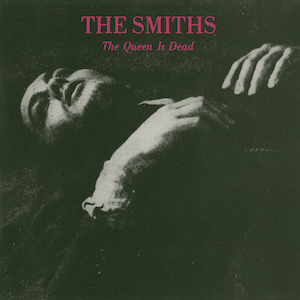
The Smiths formed in 1982 as a rejection of the synth pop that had become so dominant in the music landscape. As primary songwriters and undisputed band leaders, Morrissey and Johnny Marr were far more interested in embracing the post-punk scene and paying tribute to their 60s rock heroes – like the Rolling Stones and the Stooges – than they were selling blockbuster pop albums. But given their obvious talent and the rising relevance of indie rock in the UK (and to a lesser extent, in the US), the Smiths still managed to get off to an incredible start – with their debut record reaching #2 in the UK and #150 in the US, and their follow-up album hitting #1 on the British pop chart and #110 on the Billboard 200.
Now, one might think that a band having two successful albums to kick off their career would mean that everything would be peaches and cream. But the Smiths – and Morrissey specifically – always seemed to find a way to create unneeded controversy. The lyrics on “Handsome Devil,” “Reel Around the Fountain,” and “The Hand That Rocks the Cradle” were being read as having pedophilic undertones – an allegation that the band vehemently denied – and two of their songs (“Suffer Little Children” and “Heaven Knows I’m Miserable Now”) made specific references to a series of child murders that rocked Manchester in the 1960s. And on top of that, their second album (titled Meat Is Murder) was packed with political lyrics that tackled everything from corporal punishment to the ethics of eating meat, which of course prompted a media frenzy and a series of interviews with Morrissey (where he, of course, did not shy away stirring up more controversy).

The Smiths brooding for a photo shoot
As the band prepared to release their third album, they were simultaneously enjoying immense commercial success on a scale that had never been reached by an indie rock band, while also finding themselves in the midst of numerous scandals and receiving intense pressure from their label to release another hit. So for The Queen Is Dead, Morrissey and Marr decided to shut themselves away during the recording process (and would not only do all the songwriting, but would also self-produce) and channel their frustrations and emotions into the music. And while the overall sound was consistent with their past releases, their third album would take a step forward technologically (and one might say hypocritically, given their dislike of synth pop) – with the band opting to use a synthesizer that mimicked orchestral strings, a tom-tom loop created by a sampler, and a harmonizer that sped up Morrissey’s voice for backing vocals. With the potent combination of spite and higher production value, the Smiths were able to not only maintain their domination of the UK pop chart (again reaching #2), but also take a big leap forward in the US with the record climbing all the way to #70.
Lyrically, The Queen Is Dead is thematically consistent with prior releases from the Smiths – with a mix of Morrissey’s personal struggles and hot takes about the media, British society, politics, and the music industry. The title track is aggressively anti-monarchy, making note of the waste of taxpayer money for a tabloid vanity show, and including a specific callout of the ambitious desperation of Prince Charles and a fantasy of Queen Elizabeth in the gallows. The lyrics of “Frankly, Mr. Shankly” take a direct shot at the head of Rough Trade Records, while Morrissey laments about the Smiths being underappreciated and misunderstood on “The Boy with the Thorn in His Side.” But this album (and ultimately the Smiths’ entire discography) is at its best when it gets into the dark, the depressing, and the personal. “I Know It’s Over” is one of the most poignant break-up songs of all-time, with lyrics exploring suicidal ideation and the impact of emotional abuse; while “There Is a Light That Never Goes Out” features the simultaneously twisted and deeply romantic chorus, “And if a double-decker bus crashes into us, to die by your side is such a heavenly way to die. And if a ten ton truck kills the both of us, to die by your side, well, the pleasure, the privilege is mine.” And Morrissey even shows some rare self-awareness with “Bigmouth Strikes Again” – an obvious reference to his knack for getting himself into trouble in both the media and his personal relationships.
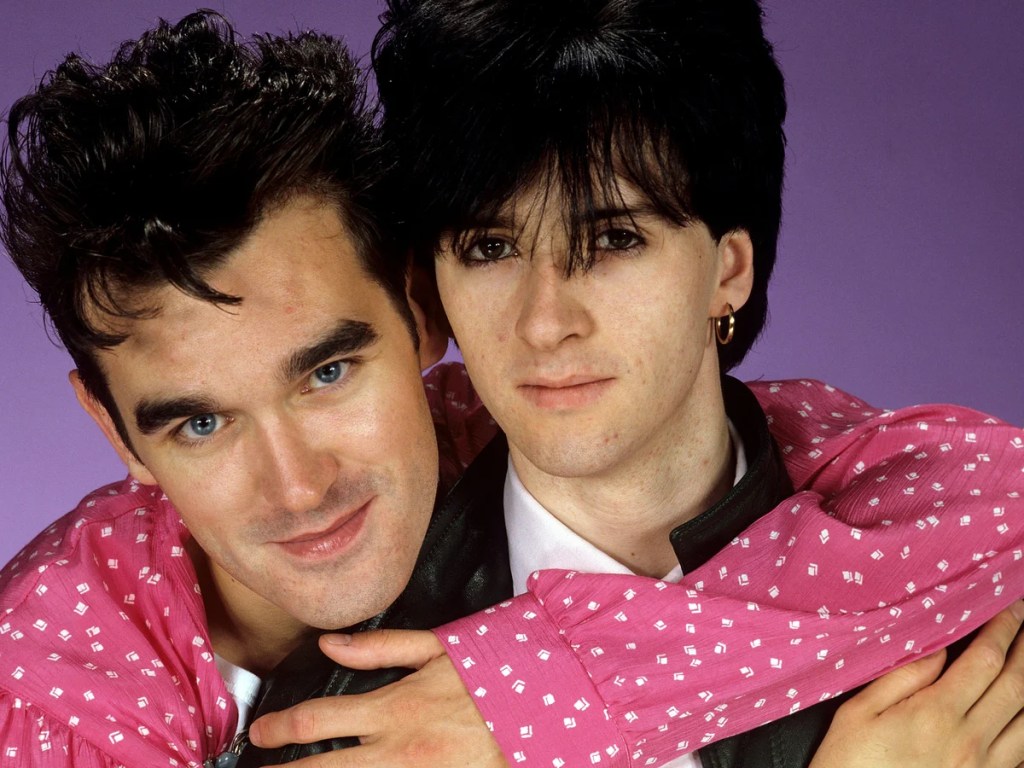
Morrissey and Marr pretending to get along
Unfortunately, the Smiths’ incredible career would burn out just five years after it began, and they would only release one more album after The Queen Is Dead. Morrissey and Marr’s working relationship became increasingly strained (and was surely impacted by constant media attention), and they fell into the ever-familiar trap of ego-driven battles for creative control. Morrissey would go on to record countless solo albums over the next several decades, while Marr would bounce around with short stints with the Pretenders and The The, and would later form Electronic alongside Bernard Sumner of New Order. But aside from their tragically short run, the Smiths remain one of the greatest indie success stories of all time. The fact that they were able to not only earn high volumes of commercial success and critical acclaim on an indie label during their heyday, but have remained a beloved and influential band all these years later, is nothing short of incredible. Their legacy, of course, has been somewhat tainted by the litany of scandals that Bigmouth has found himself in over the course of the last fifty years (including a number of racist and anti-immigrant comments), but my feeling has always been that it’s important to separate the man from the music. Morrissey and Marr remain one of the great songwriting partnerships of all time; the Smiths should be celebrated as one of the best (if not the best) British indie band of all time; and The Queen Is Dead is a near-perfect record and one of the best releases of the entire decade.
 80 Albums of the 80s
Leave a comment