Purple Rain – Prince and the Revolution (1984)
October 10, 2025
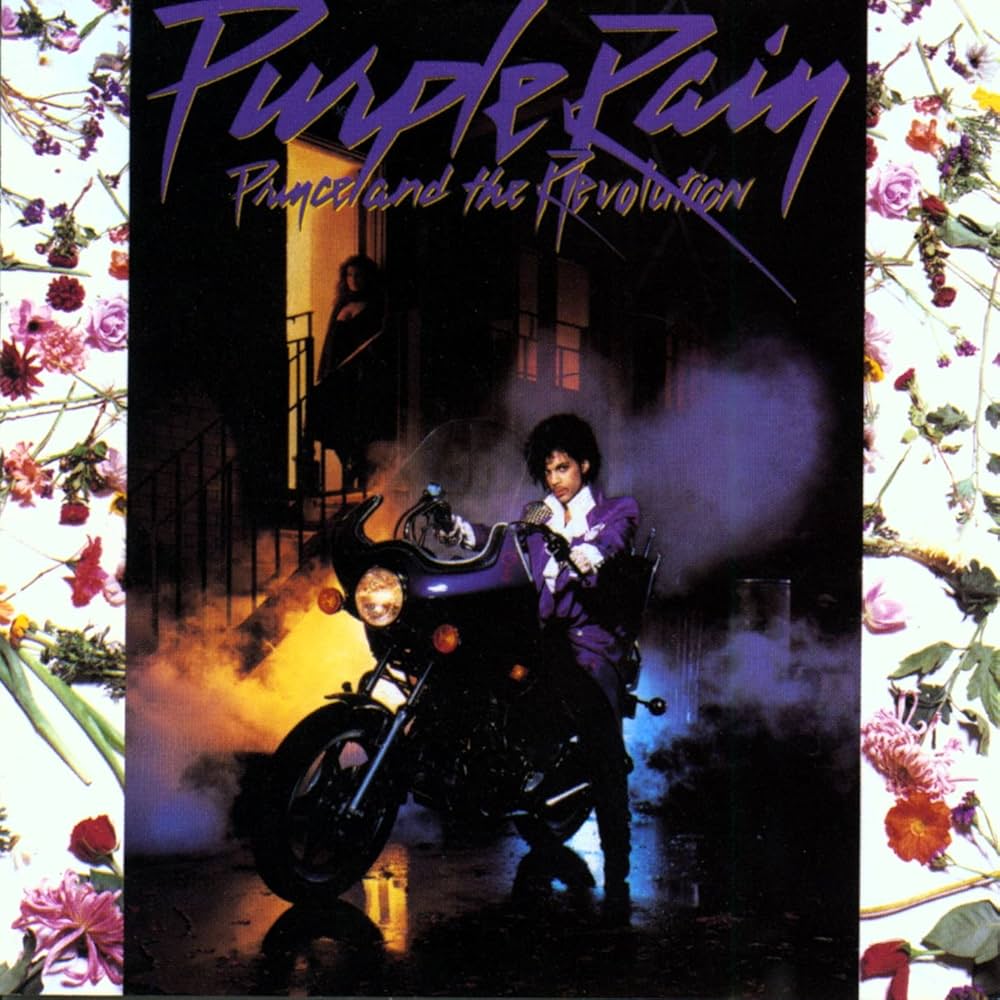
After the release of Nineteen Ninety-Nine – his most successful album to date and his first with the Revolution as his backing band – Prince was ready to take things to another level. For years, he had reportedly considered Michael Jackson to be his main musical rival and was determined to dethrone him as the face of pop music. So in the early 80s, Prince insisted that his team obtain a deal for him to eventually star in a major motion picture, setting the wheels in motion for him to reach the unquestionable apex of his career. And despite the fact that every studio his team met with rejected the idea of casting Prince in a leading role, his then-manager would eventually decide to produce the project himself to keep his most important client happy.
The creative process for Purple Rain began when Prince wrote out a series of semi-autobiographical plot points about a young singer who aspired to reach the heights of musical superstardom. From there, his team passed the ideas on to screenwriter William Blinn, who would turn the concept into a legitimate feature length screenplay. But when Prince’s team shared Blinn’s script (originally titled Dreams) with director Albert Magnoli, he immediately disliked it and introduced several re-writes – leading to what would eventually be featured in the final cut of Purple Rain. Meanwhile, Prince was busy writing the music for his film debut’s soundtrack – which would feature the most pop-oriented sound of his career and include dense layers of instrumental sections, including heavy doses of synths and drum machines.
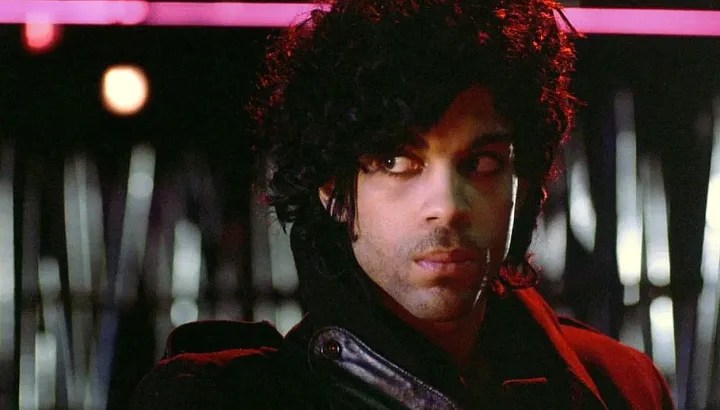
Prince, the leading man
So in the summer of 1984, Prince’s new album and film were released – immediately catapulting Prince to not only the the highest of highs in his own career, but truly for any musical artist in the twentieth century. Purple Rain would land at #1 on the Billboard 200 (the first #1 of his career), sell over 25 million copies (making it one of the best-selling albums of all time), and include five hit songs – “When Doves Cry” (#1), “Let’s Go Crazy” (#1), “Purple Rain” (#2), “I Would Die 4 U” (#8), and “Take Me With You” (#25). And despite the initial fears of casting a non-actor in a major motion picture, the film would go on to gross $70.3 million against a $7.2 million budget and become the top film at the domestic box office. This extraordinary feat would bring Prince into the exclusive club of simultaneously having a #1 song (“When Doves Cry”), a #1 album, and a #1 film in the U.S. – joining only Elvis Presley and the Beatles, who it would be hard to argue were not the two most influential musical acts of the twentieth century. And on top of the nearly unprecedented commercial success of Purple Rain – the album was also praised by critics, earned two Grammys for Best Rock Performance by a Duo or Group with Vocal and Best Score Soundtrack for Visual Media (and eventually induction into the Grammy Hall of Fame in 2010), and won the Oscar for Best Original Score.
While the film consists of a pretty corny plot, includes some questionably handled scenes of domestic violence (including by Prince himself), and features some objectively weak acting by Prince and his supporting cast – it is an overall fun ride if you like Prince and his music, particularly when he is on stage during the array of live performances throughout the movie. But the soundtrack is an undeniably excellent pop masterpiece that would stand alone as a fantastic album even if it hadn’t been featured in the film. The record’s twin #1 hits – “When Doves Cry” and “Let’s Go Crazy” – are two of the most fun pop songs of the entire decade, and the title track is a truly perfect power ballad and fitting end to the album. His lyrics follow a lot of the same themes that he would touch on throughout his entire career – primarily focusing on religion (“Let’s Go Crazy,” “I Would Die 4 U,” and “Purple Rain”), love and sexuality (“Take Me With U,” “Darling Nikki,” “When Doves Cry”), and the influence of technology in modern life (“Computer Blue”). Prince also follows the autobiographical direction seen in the film – with “The Beautiful Ones” revealing his love for Sussanah Melvoin (who was in a relationship with someone else), “When Doves Cry” detailing his romantic relationship with Susan Moonsie of Vanity 6, and “Baby I’m a Star” matching the movie’s plot about Prince’s rise to fame.
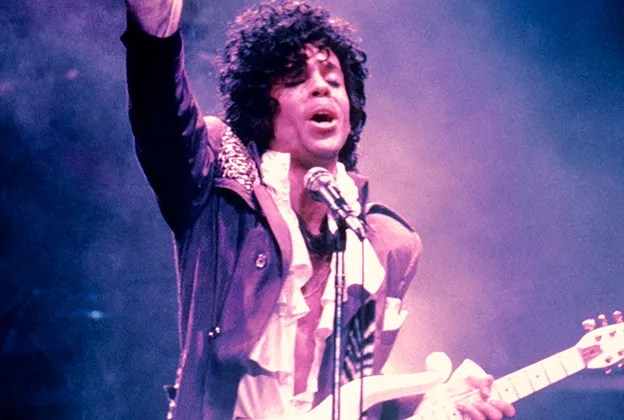
Prince performs the title track for the movie’s undeniable ending
Purple Rain is without a doubt the pinnacle of one of the great careers in music history, and Prince’s ability to dominate radio airwaves, record stores, MTV, and the American box office proves that this man was one of the greatest entertainers that the world has ever seen. And on top of his incredible musical talent, songwriting skills, and popstar persona – he had an absolutely unmatched ability to make sure that all eyes were on him. Even in addition to all of the success of his film and his songs and his album – his risque lyrics gained attention as a national news story when he became one of the targets for Tipper Gore’s crusade against adult lyrical themes after she bought the record for her 11-year-old daughter and heard the lyrics to “Darling Nikki” – “I knew a girl named Nikki. I guess you could say she was a sex fiend. I met her in a hotel lobby, masturbating with a magazine.” Prince was a one-of-a-kind, iconic personality with musical chops that matched the greatest of the greats, and Purple Rain is the shining centerpiece of his prolific, forty-year career.


Leave a Reply