Avalon – Roxy Music (1982)
June 20, 2025
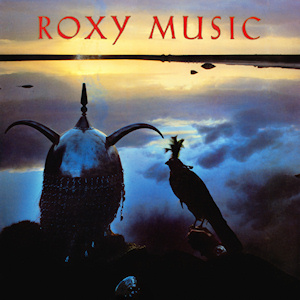
Firmly settled into the third act of their career, which began with 1979’s Manifesto and matured further on 1980’s Flesh + Blood, Roxy Music had become an entirely different band than the one formed in 1970. Gone were the days of the improvisational and experimental Brian Eno in the early 70s, as well as the art rock sound perfected in the middle of the decade, and in their place was a smoother, more pop-oriented style. But while Manifesto and Flesh + Blood leaned more toward a sort of melancholy disco – featuring danceable tracks with darker lyrics – the band decided to veer slightly from the dying genre while still maintaining the overall vibe of what they had been doing for the past two albums.
So for their eighth and final record, 1982’s Avalon, Bryan Ferry and company would take a slower-tempo, more adult-oriented direction and end up inventing a brand new sub-genre in the process. Now referred to as sophisti-pop, the music on Avalon blends elements of jazz and soul with the more typically synthesizer-heavy pop sound that had dominated the airwaves for years. It also ran with the smooth, heavily produced, meticulously arranged studio perfectionism made famous by Steely Dan in the late 70s and early 80s – most notably on Aja and Gaucho. This bold new approach would not only have immediate success – as Avalon would end up as the band’s best selling album of all time, reaching #1 in the UK and #53 in the US – but it would also inspire a lot of similar music that would come out later in the decade, including releases from artists like Sade, Prefab Sprout, the Style Council, the Blue Nile, and Joe Jackson.
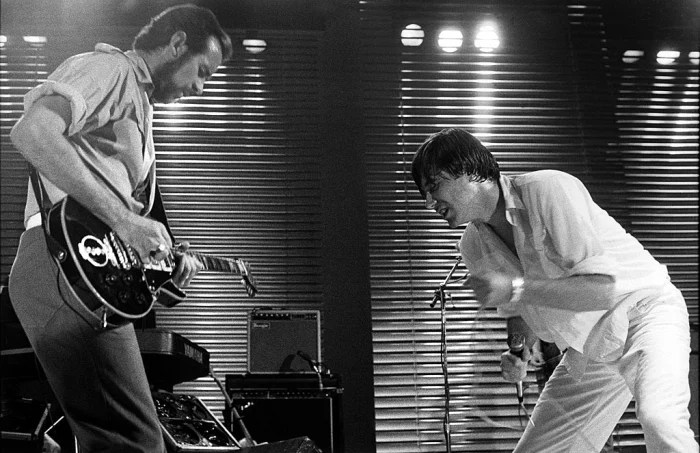
Phil Manzanera and Bryan Ferry on stage
Ferry’s idea for Avalon was to release a concept album that was heavily inspired by the story of King Arthur. He views the ten tracks on the record as individual short stories or poems that make up one comprehensive novel, focusing mainly on tales of fantasy and romance. He also took a different approach in the writing process as compared to the band’s prior releases, doing most of the composition in the studio and relying less on drugs as inspiration. The themes of romance and lost love are present on nearly every track of the album, but most clearly on “The Space Between Us,” “While My Heart Is Still Beating,” “Take a Chance with Me,” and “To Turn You On.” We also get to see the progression of some of Ferry’s inner darkness and existential malaise, which he explores heavily throughout Flesh + Blood, and continues unpacking on “More Than This” and “True to Life.” The most overt reference to the King Arthur-inspired fantasy direction is on the title track, where Ferry references the mythological king’s journey to the island of Avalon to recover after being wounded in battle. The song seems pretty clearly autobiographical given that Ferry decided to record the album in the Bahamas, write it without inspiration from drugs, and begin it with the lyrics, “Now the party’s over, I’m so tired.”
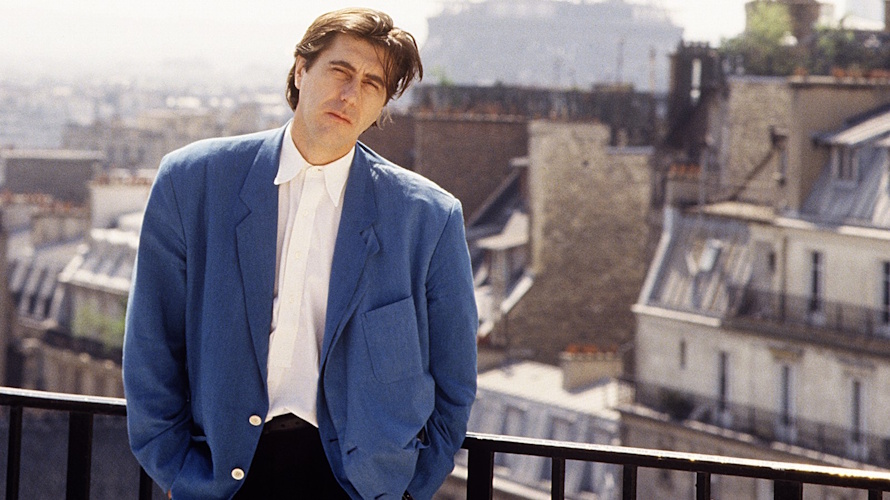
Ferry poses in Paris
Avalon is a rare case where an excellent band’s swan song actually feels like a fitting end to their exceptional discography. And while Ferry would go on to have a very successful solo career after the band had dissolved, their three distinct acts and eight individual works demonstrate a group that progressed with the times while always staying true to their original vision. And over their decade-long run, it feels to me that their first and final albums are simultaneously wildly different musically, but also their most complete and consistent releases. Their self-titled debut in 1972 is superb in its rawness and the risks that it takes, while their 1982 farewell stuns in its sleekness and meticulous production quality. But despite their dissimilarity, they serve as the perfect bookends for the discography of one of the greatest bands of the era. Roxy Music’s run deserves to be put in the pantheon of perfection, and there’s no denying that their output is as good as or better than just about anybody else’s.

 80 Albums of the 80s
Leave a reply to Diamond Life – Sade (1984) – 80 Albums of the 80s Cancel reply