The Blue Mask – Lou Reed (1982)
May 30, 2025
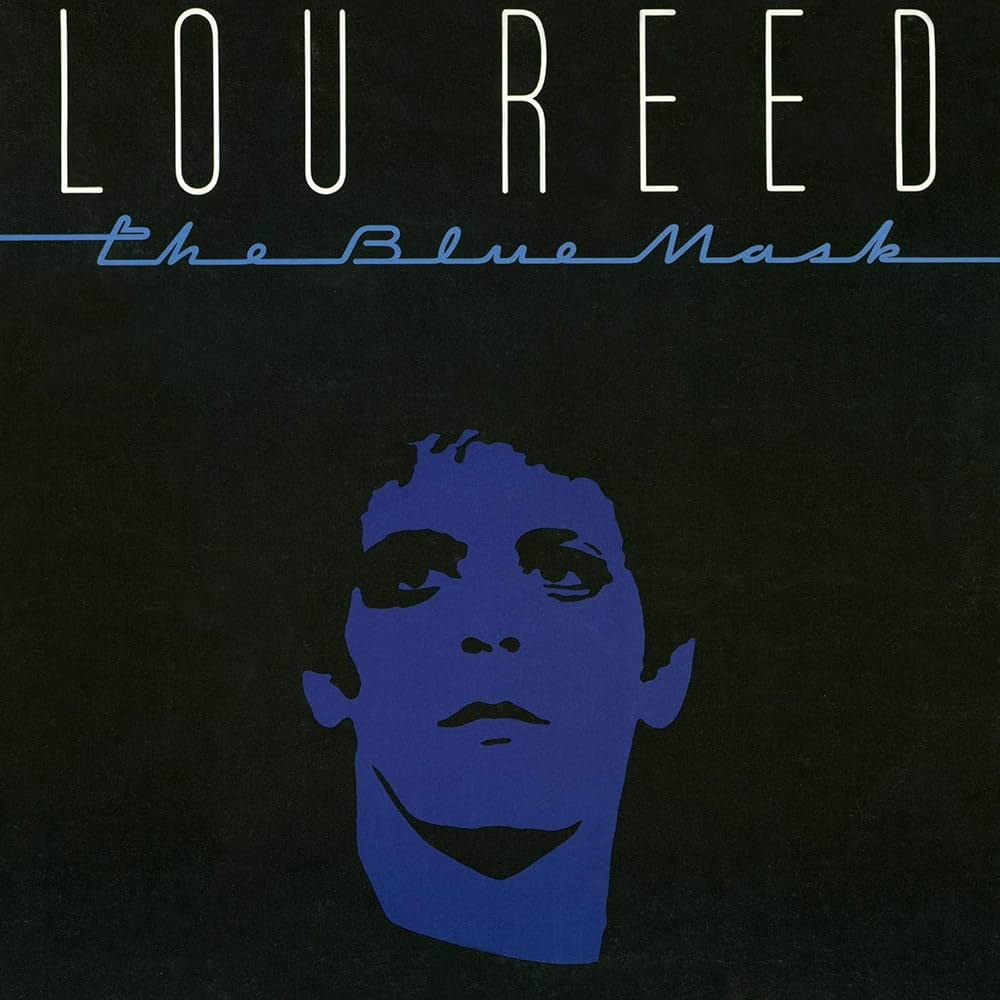
By 1982, Lou Reed’s prolific career had already spanned three decades – having released four albums with the Velvet Underground from 1967-70 and ten as a solo artist from 1972-80. But at the dawn of the new decade, Reed found himself ready to make some major changes in his life – not just career-wise, but also on a much bigger scale. So as the 70s came to a close, he decided to wean himself off of drugs and alcohol, which had dominated his life for years and started to have a severe effect on his mental and physical health. He also married British designer Sylvia Morales in 1980 with the intention of giving a more normal life a real shot, further pushing himself out of the destructive lifestyle that he had found himself in for most of his adult life.
On top of his bigger life changes, Reed was also ready to make a change musically. He had felt for years that he wasn’t making the type of music that he wanted to make, instead trying to play to critics who in many cases wanted him to either replicate his sound from the Velvet Underground years or his glam rock era in the early 70s (most notably his breakthrough solo album, Transformer). So it should come as no surprise that on the album cover of The Blue Mask, Reed’s “fuck you” attitude would lead him to use a blue version of the exact same photograph that was on the the front of Transformer. And while the album maintains the poetic lyricism and intimate vocals that had been a hallmark of Reed for years, it also shows his willingness to evolve with the changing music landscape and embrace the post-punk sound. Partnering with guitarist Robert Quine, the two-guitar combination throughout the album is notable and striking, showing very obvious chemistry between the two musicians. And the results of his change in form certainly paid off, as the album was widely praised by critics as his best release in years and was about as commercially successful as one could expect for a Reed solo project in the early 80s (charting at #169 on the Billboard 200).
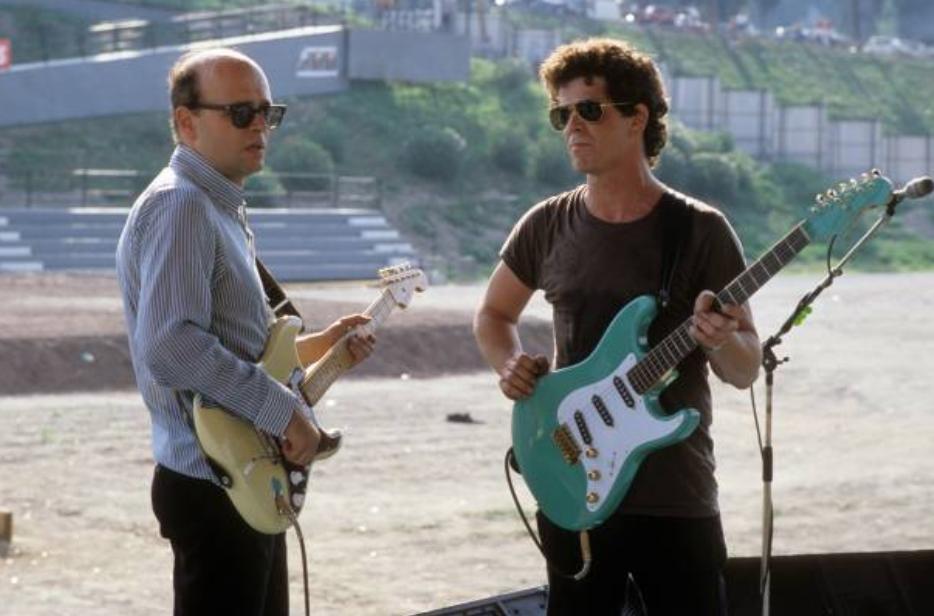
Robert Quine and Lou Reed on stage
The lyrics on the album are very clearly reflective of where Reed was emotionally at the time, which was notably released one month before his fortieth birthday. On the opening track, “My House,” a reflective Reed shows his appreciation for all that he has in his life, including his wife, his home, his motorcycle, and his music, but also looks back on his past when he pays homage to his mentor Delmore Schwartz (whom he compares his relationship to with two characters from James Joyce’s Ulysses). He again shows his appreciation for his wife on “Heavenly Arms,” and also recognizes his changing view of love and relationships on “Women,” where he asks for forgiveness for the thoughts and actions of his teenage years. And his complex relationship with addiction and the resulting paranoia is dripping from songs like “Underneath the Bottle” and “Waves of Fear,” on which the listener gets a look into just how low Lou’s bottom got before he was ready to clean up his life.
But the album’s centerpiece (both figuratively and literally in its track listing) is “The Blue Mask” – where Reed further pushes the point made by the record’s album art. He calls out music critics through violent and disturbing lyrics (including a nod to Oedipus) that reference the perverse themes of his earlier works, which journalists praised with a sort of sick fascination at the time. The song’s title also serves as a metaphor for the person that Reed was trying to be for the better part of a decade in order to impress critics and fans, but shows that he was finally ready to “take the blue mask down from [his] face.”

Reed at a New York City café
The Blue Mask is both an excellent demonstration of Reed’s musical ability, as well as the moment where he seems to finally find comfort with who he really is. Reaching middle age after decades of hard living tends to leave most people at a fork in the road, where they can either continue down the destructive path they’ve been traveling, or turn over a new leaf. Reed – somewhat surprisingly – made the right choice. He gave up the toxins that were wrecking his body, he embraced romantic love in a meaningful way, and most importantly – he recognized how grateful he should be for all that he had. As only Reed can, he blends his unmatched songwriting skills in a way that can make you feel his sickness, his darkness, and his pain, while simultaneously experiencing his joy, his growth, and his gratitude. And despite the fact that he would go on to release nine more solo albums (plus a collaboration with John Cale in 1990 and another with Metallica in 2011), The Blue Mask very much feels like Reed finally making the thesis statement for not only his incredible career, but also for his extraordinary life.

 80 Albums of the 80s
Leave a reply to Honi Soit – John Cale (1981) – 80 Albums of the 80s Cancel reply