Rip It Up – Orange Juice (1982)
May 2, 2025
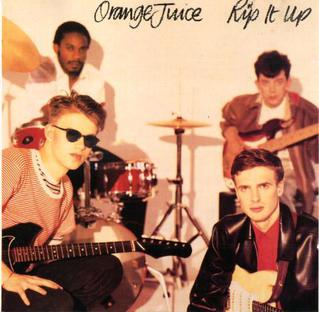
Edwyn Collins began his career in the UK alt rock scene by starting a band with a college friend called the Nu Sonics in 1976. In the three years that would follow, members would come and go, new spinoff bands would be started, and Collins would be the last man standing with not only a completely different band, but also a brand new name – Orange Juice. Collins and company set out to intertwine two of their seemingly very different musical influences to create a sound that was familiar to indie rock audiences, but also completely their own. On one hand, the band was very inspired by some of the British punk bands who had found success in the 1970s, particularly Television and Buzzcocks; and then on the other, they found themselves drawn to some of the most beloved pop and rock groups of the 1960s – ranging from the Four Tops to the Byrds to the Velvet Underground.
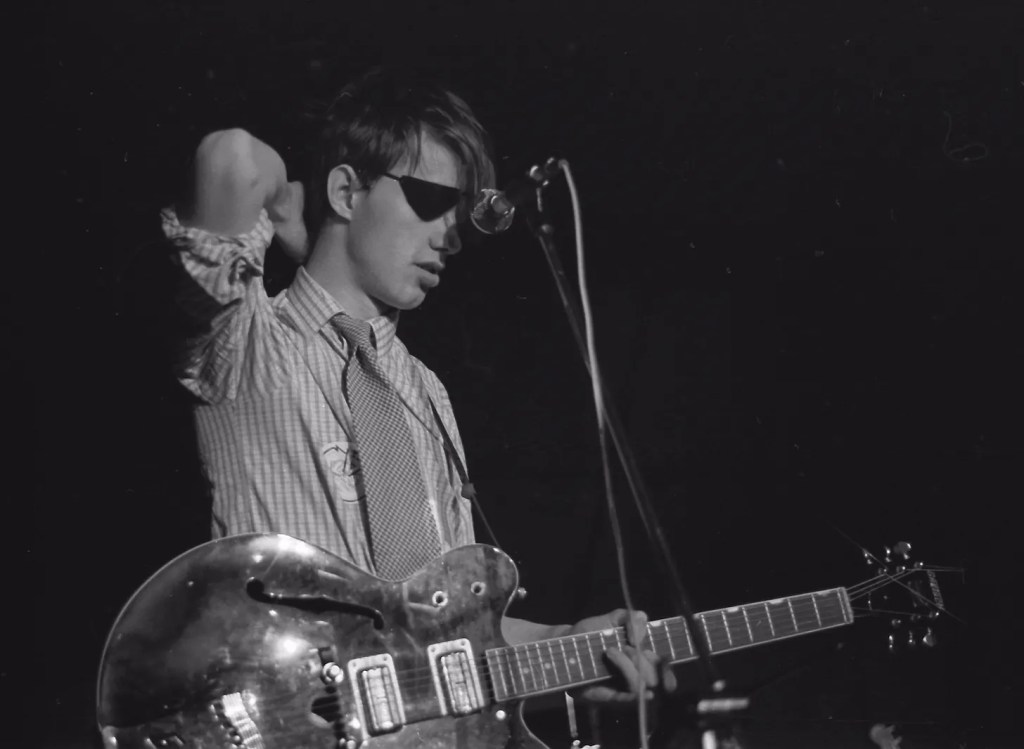
Collins performs in an eye patch after a pre-show fist fight
After years of cutting their teeth on the indie scene, they had finally built up enough momentum to get the attention of a major label and released their debut record, You Can’t Hide Your Love Forever, in February 1982. Despite the fact that it had very little commercial success and received mixed reviews at the time, it has since gotten its proper due for not only clearly being an important building block for what would come next, but also as an excellent album in its own right. In a sign of what was to come, their debut album successfully incorporated a wide array of musical influences, made especially evident by the fact that it contains a cover of the Al Green hit, “L-O-V-E (Love).” But the most critical shift would come just a few months later, when Orange Juice would replace their prior drummer with Zimbabwe-born vocalist and percussionist, Zeke Manyika. The addition of Manyika would not only bring in a completely new set of musical influences and additional songwriting talent, but also give the band something that would make them stand out from all the other British indie pop groups at the time. This new iteration of Orange Juice would release Rip It Up just nine months after their debut album, and would score their first and only top 40 hit in the UK with the title track peaking at #8.
The masterful combination of their influences is most clearly demonstrated on “Rip It Up,” which features a guitar riff inspired by Chic’s 1979 mega-hit “Good Times” and lyrics referencing 1977’s “Boredom” by Buzzcocks. The blend of the catchy guitar, oddball synth sound, and Collins’ crooning vocals produces an undeniable track that makes perfect sense as their biggest hit. Orange Juice also pays homage to one of their favorite 1960s acts with “I Can’t Help Myself,” which directly references the Four Tops’ song of the same name. But on top of the genre mashing and odes to their influences, Manyika’s impact on the album is never more evident than on “A Million Pleading Faces” and “Hokoyo,” which are the two biggest standouts on the album outside of the title track despite having lyrics that are primarily in Shona (one of the main languages of Zimbabwe). And in fact, the latter is actually a direct reference to one of Manyika’s primary influences, Thomas Mapfumo, who wrote a song by the same name (translating to “Watch out!” in English) to protest the white-dominated Rhodesian government.

A new-look Orange Juice after the addition of Manyika
The tragedy of Orange Juice is that after their first two excellent records, they would only release one more in 1984 before breaking up for good. They are a prime example of a band that had all the talent in the world, but just couldn’t quite break through. Their superpower was their ability to bring together influences that not only span genres, but also continents, in a way that isn’t inaccessible or pretentious. The closest comparison I can give (removing the fact that they had nowhere near the career success nor longevity) is Talking Heads, who were the model for nearly the entire roster of alt rock bands in the UK during this era. And while there were many excellent groups from the time who also did a lot of the same things well, I cannot stress enough that these guys were doing it on a completely different level all together. I love bands like XTC, the Jam, and Echo & the Bunnymen, but Orange Juice eats them for breakfast (pun intended) on Rip It Up. And aside from expanding upon what was already out there in the indie scene, their success would go on to inspire bands who would end up being far more successful – most notably the Smiths. That is why I implore you – maybe more so than with any other album on my list – to give this record a shot if you haven’t listened to it. Orange Juice deserved more praise during their heyday, and they deserve more praise now.

 80 Albums of the 80s
Leave a reply to Psychocandy – The Jesus and Mary Chain (1985) – 80 Albums of the 80s Cancel reply