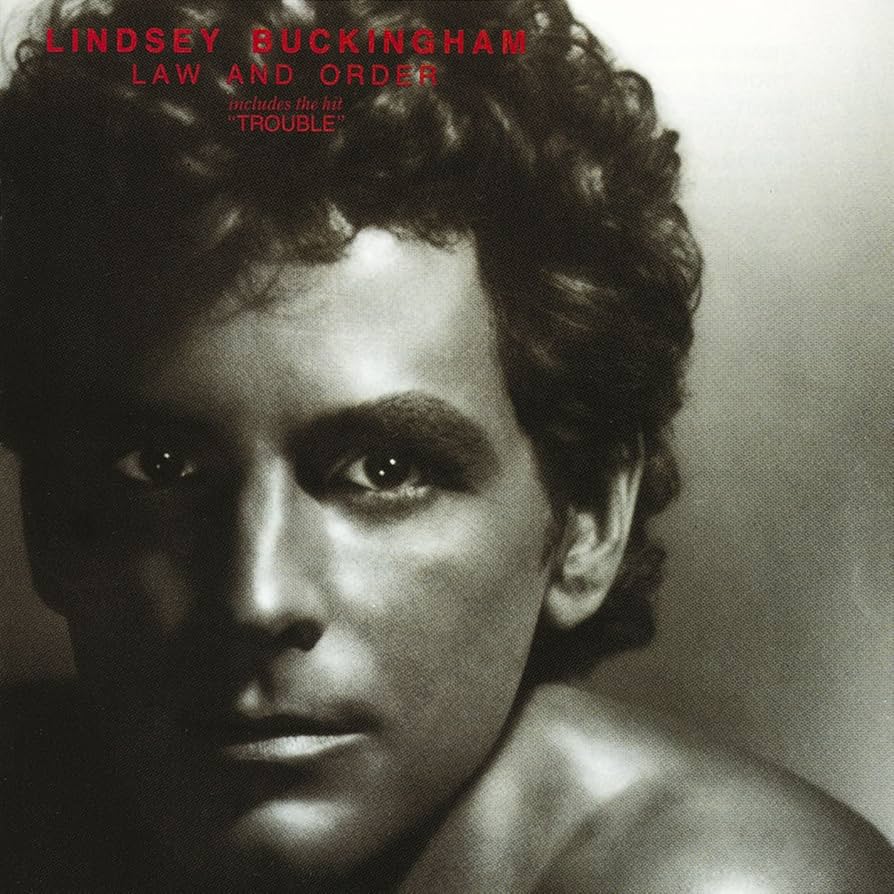
Law and Order – Lindsey Buckingham (1981)
April 4, 2025
Part II of Mac Month:
A Four-Part Series on the Members of Fleetwood Mac
You can read Part I of Mac Month here, Part III here, and Part IV here.
Much like Stevie Nicks with her debut album, Bella Donna, current band mate and former boyfriend Lindsey Buckingham was hellbent on proving himself as a solo artist. After the incredible success of Rumours in 1977, Buckingham was absolutely adamant that the band could not just continue to churn out the same album again and again (which is exactly what their record label wanted them to do). He had also apparently become obsessed with post-punk bands like Talking Heads and wanted to do everything in his power to keep Fleetwood Mac as a major player in the evolving rock music landscape. So in typical Lindsey fashion, he asked Mick Fleetwood if he could take the reins for their next album, Tusk, and even record some of the tracks on his own before bringing in the rest of the band. Upon getting the green light, he essentially went into a cocaine-induced ego trip during the recording – highlights of which included an episode where decided to “tape microphones to the studio floor and get into a sort of push-up position to sing,” and another where he “freaked out in the shower and cut off all his hair with nail scissors.” And despite the fact that Tusk is absolutely brilliant and arguably their best work outside of Rumours, the album flopped commercially compared to the success of their prior release.
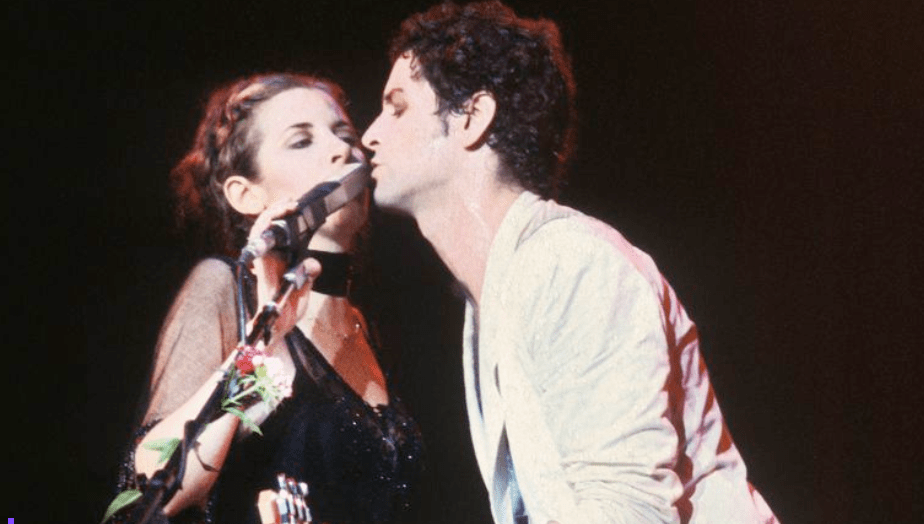
Nicks and Buckingham with Fleetwood Mac
After Tusk, Buckingham took the fall for the fact that their latest album didn’t reach the heights of Rumours, and the entire band was ready for a break during which they could pursue solo work. And despite the fact that his influence on the last Fleetwood Mac record didn’t result in enormous commercial success, he remained steadfast in his desire to achieve an experimental, lo-fi sound supported by quirky lyrics in the spirit of a lot of the most successful post-punk bands from the UK at the time. So with 1981’s Law and Order – the title of which was based on his belief that discipline and commitment were critical to artistic success – he took complete control by co-producing the album and playing every single instrument (with a couple instances where he sought out help from his former bandmates). In later years, he has admitted that a lot of the bizarre lyrics were intended to be sarcastic and tongue-in-cheek, but he evidently has no awareness that it’s hilarious for a guy who took such a fascistic approach to production to name his album Law and Order. But despite the fact that Buckingham’s first solo project did fairly well financially – with the album reaching #32 in the US and “Trouble” hitting #9 on the Billboard Hot 100 – it came nowhere close to the success of any of Fleetwood Mac’s most recent releases (including Tusk), nor did it even sniff the popularity of Stevie Nicks’ solo debut.
The strongest points of Law and Order come on the songs that sound the most like Buckingham’s contributions to prior Fleetwood Mac albums. The drums on the opening track, “Bwana,” sound like they came directly from the Tusk recording sessions, and the record’s biggest hit, “Trouble,” feels like Fleetwood Mac operating at the peak of its power. I’m also convinced that “Johnny Stew,” his tribute to John Stewart of the Kingston Trio, is essentially a less disco version of “You Make Loving Fun.” But on top of the album’s highest points, there are some solid filler tracks that range from the high-energy, satirical “That’s How We Do It in L.A.” (which literally begins with Buckingham screaming, “Survey says!” ala Family Feud), to the country ballad, “I’ll Tell You Now,” which is focused on the hopelessly heavy roadblock of dealing with depression. Buckingham does also include a fair amount of cover songs, which include Skip & Flip’s 1950s rock and roll number, “It Was I”; “September Song,” which originated in the 1938 Broadway musical, Knickerbocker Holiday; and “A Satisfied Mind,” a pop music staple that had been covered by countless musicians over the years, including Ella Fitzgerald, the Byrds, Glen Campbell, and Bob Dylan.

Buckingham in the studio
What’s clear from listening to Law and Order is that despite the fact that it didn’t perform as well as the releases of Fleetwood Mac or Stevie Nicks, it is very obvious where Buckingham’s talents and contributions lie. He is simultaneously pop-oriented in his hooks, excellent in his guitar playing, and unique in his ability to write lyrics that are weird but not off-putting. But given some of the horrors that have been revealed in his behavior and demeanor during this period – on top of lyrics that seem to show someone who is lonely, depressed, and dealing with repercussions from past decisions – it’s clear that Lindsey Buckingham was a pretty difficult guy to deal with (both professionally and personally). And for a man who clearly had a pretty big ego and a fair amount of ambition, I cannot imagine it was easy for him to get completely blown out of the water by Stevie Nicks (who, as I wrote previously, also seemed to be quite preoccupied by competing with Buckingham during her solo career). But despite the comparisons that can be made about the duo’s solo records – as well as the 80s releases from Christine McVie and Mick Fleetwood – it’s undeniable that the members of the Mac were at their best as one cohesive unit.

 80 Albums of the 80s
Leave a reply to Bella Donna – Stevie Nicks (1981) – 80 Albums of the 80s Cancel reply