Discipline – King Crimson (1981)
February 21, 2025
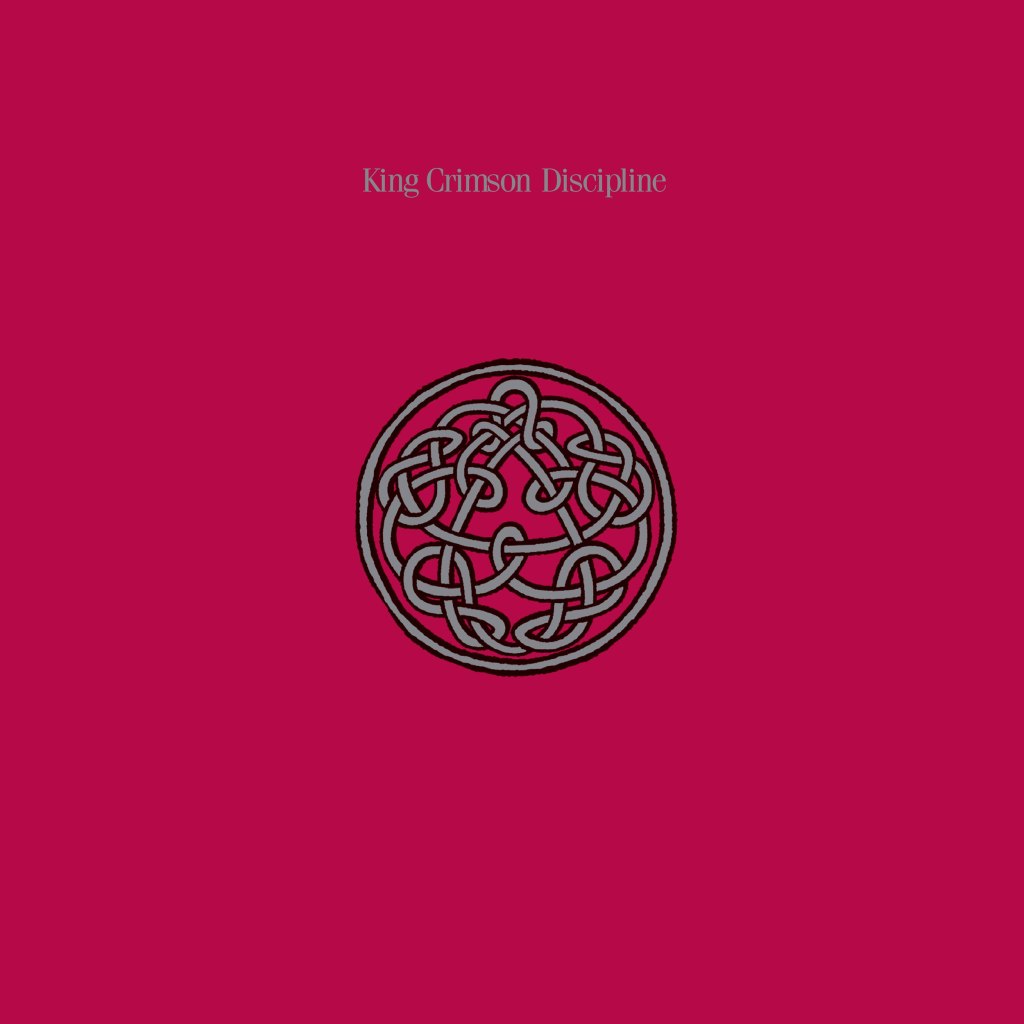
After seven studio albums and a seven-year hiatus, all that remained of the original King Crimson was Robert Fripp and his ego. And even to Fripp, it was clear that whatever came next wouldn’t be a King Crimson project in earnest, so he set out to form a new band. Retaining Bill Bruford, who had been a founding member of Yes and King Crimson’s drummer from 1972-74, Fripp began his search to fill out a quartet for this new project, and would end up finding the perfect pieces to bring his brand of prog rock into the 1980s with Adrian Belew and Tony Levin. Belew had about as strong of a resumé as anyone at the time, having been in Frank Zappa’s and David Bowie’s backing bands, as well as a touring member of Talking Heads. And Levin had had a successful career in his own right as Peter Gabriel’s bassist after he broke off from Genesis and started his solo career in 1977.
Having put together his new band, Fripp’s original intention was to name the quartet “Discipline” given how different it was going to be from the original King Crimson – both sonically and personnel-wise. But after starting to record their first album and embarking on a short tour, the band decided it would be best to revert to “King Crimson,” likely for name recognition reasons. King Crimson 2.0 was a fairly surprising experiment for a lot of reasons (and unsurprisingly wouldn’t work out long-term for those very same reasons). This was the first time Fripp had added an additional guitarist to his band in Belew, giving him the extremely prominent role of not only lead singer and lyricist, but also co-lead guitarist.

The original iteration of King Crimson
Fripp, of course, would still maintain veto power and final say on everything that would and wouldn’t appear on the album, but this did allow for Belew (and also Levin) to bring in a lot of the sounds and techniques that had become popular with the growing new wave and post-punk movements. The combination of Belew and Levin’s experience blended with Fripp and Bruford’s prog rock chops would lay the groundwork for a new post-prog sound, which they would perfect not only on Discipline, but also the following two records of the trilogy – 1982’s Beat and 1984’s Three of a Perfect Pair. Fripp’s experiment would go on to become fairly successful commercially – charting at #41 in the UK and #45 in the US – but got mixed reviews critically for being too “artsy.” Later reviews have been much kinder to the album and rightfully credited it for being a pioneer for a new sound and an inspiration on much of what was to come throughout the 80s.
Discipline maintains a lot of the heady nerd rock that had become so intertwined with prog throughout the 70s. “Elephant Talk” is an amazing application of alliteration to Belew’s songwriting, featuring five verses that sequentially go through the alphabet from A-E, ending of course with the song’s title. They also maintain the tradition of many of their peers, including Rush on Moving Pictures, by filling their songs with references to other artistic mediums. “Matte Kudasai,” which is the Japanese translation of “Please Wait,” pays homage to Madame Butterfly in its story of a woman waiting for her lover who is overseas, and “The Sheltering Sky” is based on a novel by Paul Bowles, who was associated with the Beat generation, a major influence on the middle piece of King Crimson’s 80s trilogy. The record also features a few other interesting songwriting stories, including a letter Belew’s wife wrote him while she was painting (“Indiscipline”), Belew’s paranoia post-Lennon assassination that came to a head when he was harassed by a gang in London (“Thela Hun Ginjeet,” an anagram of “Heat in the Jungle”), and the album’s instrumental title track on which Fripp wanted to maintain (you guessed it) discipline by not having any one instrumentalist take the lead nor accompany any other instrumentalist’s section.
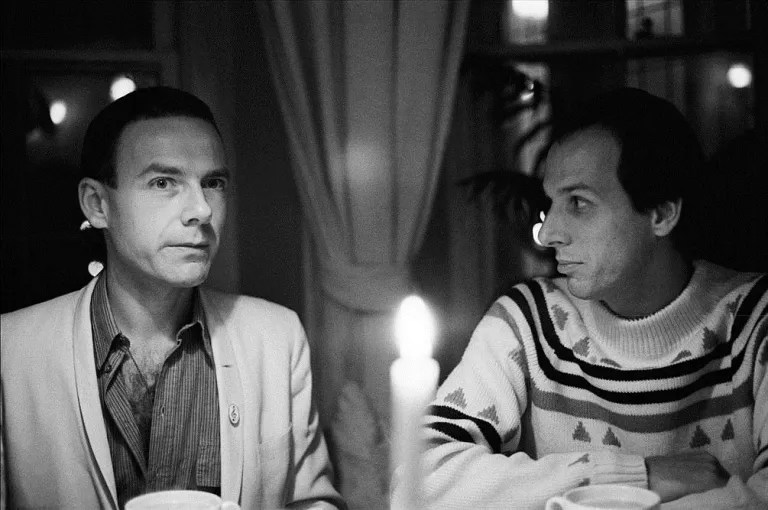
Fripp and Belew: King Crimson 2.0
It’s not really fair to consider Discipline (or the rest of the trilogy) as a true King Crimson project. In a lot of ways, it’s much more of an example of how a supergroup is done right. The thing that makes this album so special is that it incorporates the best parts of 70s prog with the post-punk and new wave sounds that had become staples of the 80s. The members of this iteration of Crimson bring along with them experience working with some of the best chameleons in music history – Zappa, Bowie, Talking Heads, and Peter Gabriel were all acts that were constantly changing and meeting the moment in the time that they were in. And notably, they all did it in a way that didn’t feel like selling out or going commercial, but rather preventing themselves from having “one-trick pony” legacies. So to Fripp’s credit – who I cannot imagine had an easy time collaborating as fully as he did with Belew – he was truly able to bring King Crimson into the 80s in a way that not only felt true to who he was and who he had been, but was also adaptive to all of the incredible changes to rock music that had happened in the seven years since the band’s last record. The Fripp-Belew connection is undeniable, and we’re lucky to not only get to enjoy one of their collaborations, but three of a perfect pair.

 80 Albums of the 80s
Leave a reply to So – Peter Gabriel (1986) – 80 Albums of the 80s Cancel reply