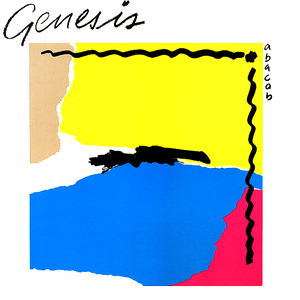
Abacab – Genesis (1981)
February 14, 2025
Part II of Phil Phebruary:
A Two-Part Series on Phil Collins’ Extraordinary ’81
You can read Part I of Phil Phebruary here.
After twelve years as a band, eleven studio albums, and one lead singer change, Genesis entered the new decade ready to make a change. In 1980, they had begun their transition from prog-rock to more of a pop sound with Duke, which was by far their most successful album to date – charting at #1 in the UK and #11 in the US. And in early 1981, Phil Collins had released his first solo record, Face Value, which not only succeeded as a complete album, but also produced Collins’ all-time mega-hit “In the Air Tonight.” As a result, Collins and the rest of Genesis had reached levels of fame and celebrity that had seemed extremely unlikely at their earliest stages in the late 1960s and early 1970s.
For their next project, they decided to really lean into the pop sound that had brought them so much success – while not completely abandoning their more experimental and art rock roots – and released 1981’s Abacab. While many of the band’s earliest fans sneered at the change in direction, and even keyboardist Tony Banks conceded that it was the band’s “least technical” album at the time, the results spoke for themselves with its commercial success, as it charted at #7 and gave the trio their first top 10 hit in the US. And despite any flack they may have received at the time, the record combines the thematic and musical weirdness that made the band so appealing in the first place with the simple, catchy melodies that would become staples of their future albums and all of Collins’ solo releases.

Phil in the studio
The band was able to successfully ride this line on Abacab by fairly splitting up the writing – Collins, Banks, and Mike Rutherford each wrote one song on the album completely on their own (“Man on the Corner,” “Me and Sarah Jane,” and “Like It or Not,” respectively), and all of the rest of the tracks were collaborative efforts. The Collins pop influence is extremely evident on not only his one solo writing credit, but also “No Reply At All” – both of which could easily be mistaken as tracks from his later solo releases. Rutherford’s “Like It or Not” is probably the most forgettable song of the record, but he’s lyrically credited for the title track, which is as good a song as any in the Genesis discography.
But the album’s best songs are the ones on which Banks’ experimental weirdness shines. “Keep It Dark” tells the story of a man who is captured by an alien race and sees their “world full of people, their hearts full of joy” and “cities of light with no fear of war,” but decides he can never tell anyone because no one would believe him. And the seven-and-a-half minute, two-song suite “Dodo/Lurker” is by far the most interesting track on the album. The lyrics of “Dodo” follow the ugly titular bird and a fish with “a hook in his throat” – tying the two protagonists in with all of the nature that surrounds them. In “Lurker,” two eyes look out and speak a riddle to the band, which I’ll include below and be genuinely impressed if anyone can answer without looking it up.
Clothes of brass and hair of brown
Seldom needs to breathe
Don’t need no wings to fly
Oh, a heart of stone
And a fear of fire and water
Who am I?
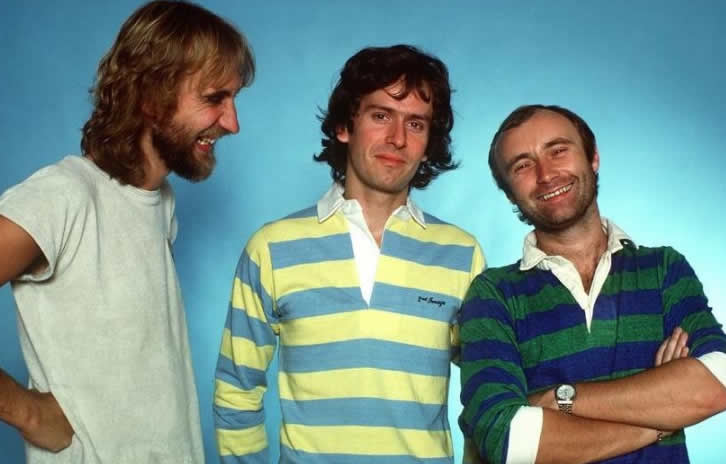
Rutherford, Banks, and Collins
Without question, Abacab is my favorite album of the Genesis discography for many of the reasons mentioned before. It’s the exact moment in time where the band was able to combine their weird, art-rock experimentalism with pop perfection – creating an album that has something for everyone (with the possible exception of Peter Gabriel loyalists). While I personally enjoy the early, prog-rock Genesis, it’s completely understandable why the long solos and instrumental sections could be polarizing to commercial audiences. And on the flip-side, although I adore pure pop Genesis records like Invisible Touch, the band had basically sold out and become a joke to their original fans by that point. But Abacab is the trio at the peak of their powers, showing off their ability to make interesting music that is not only accessible to mainstream audiences, but might even make those audiences give some of their earlier works a shot.

 80 Albums of the 80s
Leave a reply to 5150 – Van Halen (1986) – 80 Albums of the 80s Cancel reply