Face Value – Phil Collins (1981)
February 7, 2025
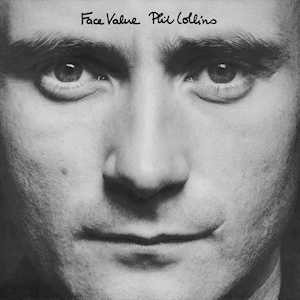
Part I of Phil Phebruary:
A Two-Part Series on Phil Collins’ Extraordinary ’81
You can read Part II of Phil Phebruary here.
If you could achieve international success with your band and then parlay it into one of the biggest solo pop careers of all time, but you had to lose your wife and kids in the process, would you do it? Well if your name is Phil Collins and the year is 1981, your answer is a resounding “yes.” After taking over for Peter Gabriel as lead singer of Genesis for 1976’s A Trick of the Tail, Collins and his bandmates started gaining some serious momentum and mainstream success. Fully aware of the opportunity that he had, Phil threw himself into his work – spending the vast majority of his time recording and touring with the band. Unfortunately for Phil, his wife, and his two young kids, this success came at a steep price. The band took a hiatus in 1979 while Collins unsuccessfully attempted to save his marriage, which had been sputtering at the expense of his career, and entered the new decade simultaneously experiencing the highest of highs professionally and the lowest of lows personally. So Collins combined his newly found career opportunities with his emotional devastation and created his 1981 “Sad-Sack Hall of Fame” solo debut, Face Value.
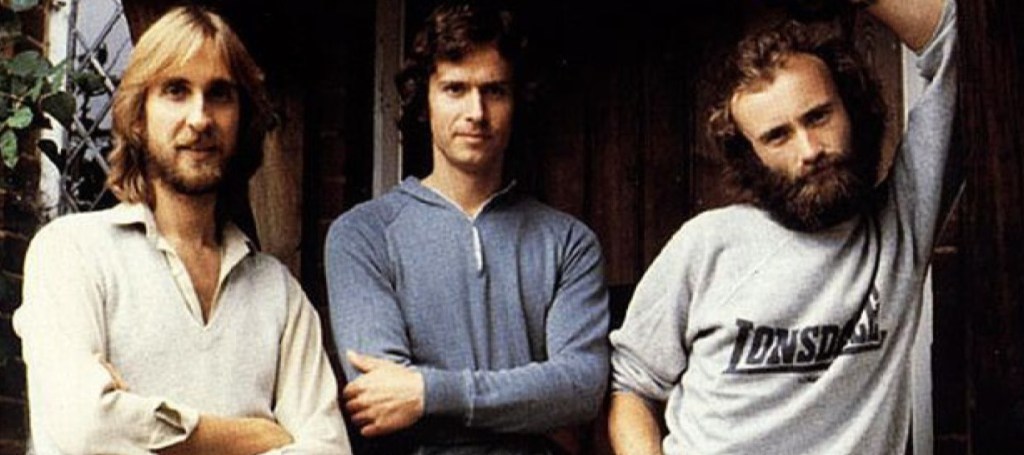
Genesis after the departure of Peter Gabriel
In what would become the superpower of his solo career (as well as his influence on the later Genesis records), Collins was able find a middle ground between some of the most upbeat, joyously danceable pop melodies and some of the saddest, sappiest ballads you’ve ever heard in your entire life. On top of Collins’ prowess as a singer, songwriter, and drummer, his connections in the industry gave him access to some of the era’s greatest talents. In addition to highly sought-after studio musicians, he was able to get instrumental contributions from Eric Clapton, the Phenix Horns (of Earth, Wind & Fire fame), and Weather Report’s Alphonso Johnson. And as you may be able to tell from the latter two contributors, Collins was hellbent on achieving a funky R&B sound with some of the tracks on his debut record – later saying that he was highly influenced in his songwriting by the Jackson 5. And on top of the R&B numbers, there is a perfect mix of pure rock, bubblegum pop, and cross-genre nods to his Genesis days (most notably “Behind the Lines,” a song off of Duke which he re-recorded with horns and sped up in an attempt to emulate Michael Jackson’s sound).
Thematically, the album is heavily influenced by Collins’ divorce and emotional struggles as he attempted to pick up the pieces of his life. Despite the persistent rumors that “In the Air Tonight” is about Collins watching someone watching someone else drown, he has since cleared up that the lyrics were mostly improvised but were about the end of his marriage with his ex-wife. “I Missed Again,” “You Know What I Mean,” and “If Leaving Me Is Easy” are also clear nods to his personal life at the time and became the building blocks of the lovesick lyricism that would define so much of his solo career. But elsewhere, he seeks silver linings and finds optimism about new beginnings with “This Must Be Love” and “Thunder and Lightning” – which again are clear indications of where he would end up going throughout the decade. He also works in back-to-back instrumentals to close out the A-side – with “Droned” serving as an epilogue to “The Roof Is Leaking,” and “Hand in Hand” making perfect use of the Phenix Horns alongside the chanting of an LA-based children’s choir. And on top of his Genesis cover, he also takes on the ambitious task of adding his rendition of “Tomorrow Never Knows,” which includes instrumentals and vocals playing in reverse while Collins sings over them, as well as the hidden track of “Somewhere Over the Rainbow” – included as a tribute to John Lennon after his murder in 1980.

Phil goes solo
Despite the obvious caveat that it came after over a decade with Genesis and multiple albums that featured him as lead vocalist, Face Value is as impressive as any debut album that I can think of. Collins was able to incorporate some of the best parts of Genesis, along with his own unique sound, in a way that blended together the era’s most popular genres. He also established himself as one of the preeminent love song writers of the era, mastering the art of capturing the highs and lows of the vulnerability that comes with romantic relationships. Collins is as good as anyone at combining the nostalgia of the past with the promise of a better future (although poor Phil was clearly better at writing love songs than actually being in love, as the divorce preceding this album wouldn’t be his last, or even his second-to-last). But clearly old Phil’s personal failings don’t reflect his resounding professional success – Face Value is a classic that can be enjoyed and appreciated by absolutely everyone.

 80 Albums of the 80s
Leave a reply to So – Peter Gabriel (1986) – 80 Albums of the 80s Cancel reply