Honi Soit – John Cale (1981)
January 24, 2025
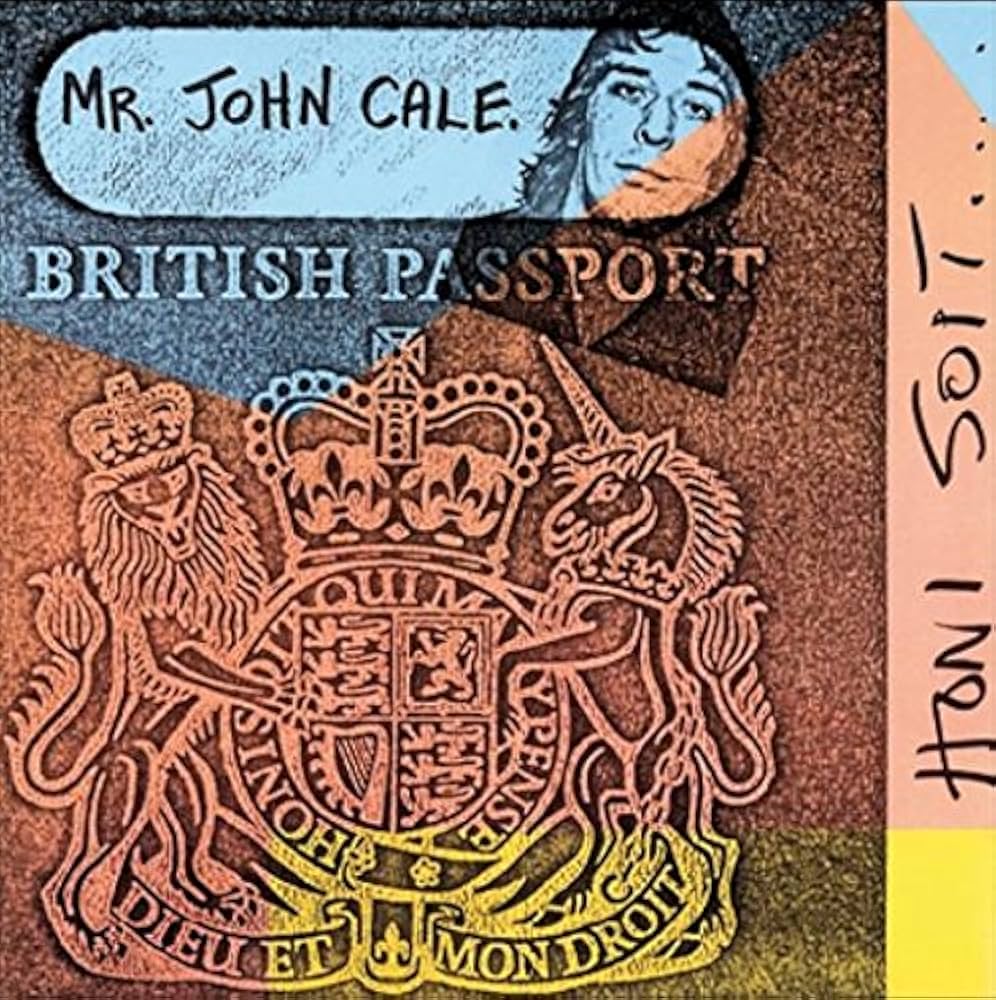
As is so often the case when two creative geniuses collaborate to make something great, egos will win out and inevitably lead to an ugly break-up. And John Cale and Lou Reed were no different in their three-year run as the co-founders and key members of the Velvet Underground. Reed was not only the primary songwriter and lead vocalist, but was also undoubtedly the most famous member and clear-cut leader of the band. He, like many others that have found themselves in that position, was controlling, domineering, and resentful of any dissent to his wishes. He also was much more pop-oriented and wanted to maintain a sound that was both musically interesting and commercially viable. Cale, on the other hand, was weirder, more experimental, and primarily interested in pushing the boundaries of what their music could be. This combination, while on one hand contributing to the unique and beloved sound of the Velvets, was unsustainable given the stubbornness of the duo. Ultimately, Reed forced the hands of the rest of the band and essentially delivered a mandate that Cale had to go, which they begrudgingly accepted. Drummer Moe Tucker said afterwards that “when John left, it was really sad. I felt really bad. And of course, this was gonna really influence the music, ’cause, John’s a lunatic. I think we became a little more normal, which was fine, it was good music, good songs, it was never the same though. It was good stuff, a lot of good songs, but, just, the lunacy factor was gone.”
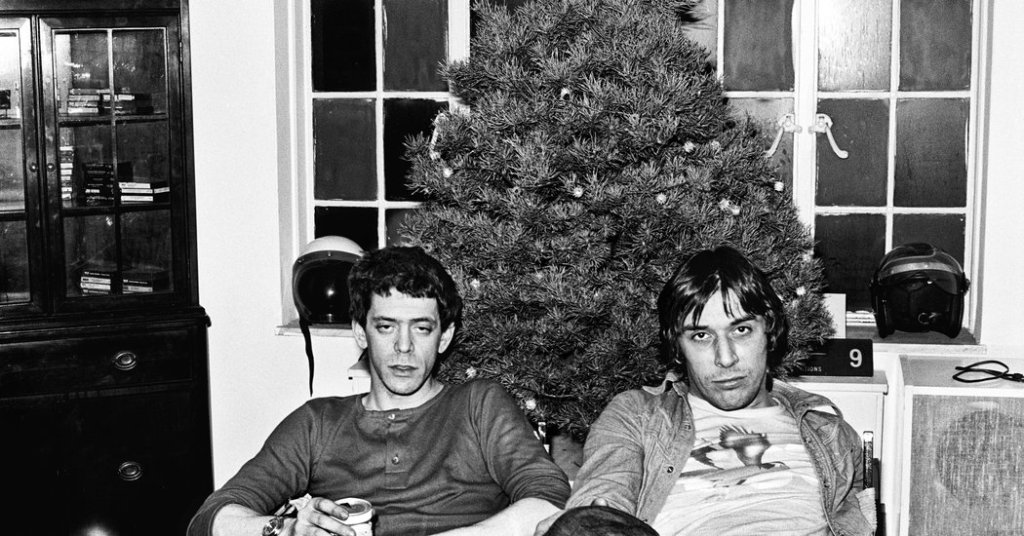
Reed and Cale having a very merry Christmas
So Cale took his lunacy and set out on his own career, releasing six solo studio records from 1970-75. Despite the fact that his records didn’t sell particularly well (see: lunacy), 1973’s Paris Nineteen Nineteen and 1974’s Fear were excellent albums that have gotten their due long after their release. And then for the next six years, he focused his attention on a live album, an EP concept project based on a play from the nineteenth century, and production work on Squeeze’s 1978 self-titled debut. But as he entered the 1980s, Cale finally found himself ready to embrace a more commercial direction over a decade after his split-up with Reed, and began work on 1981’s Honi Soit. The album’s title is an abbreviation of “honi soit qui mal y pense,” which is French for “shame upon him who thinks evil of it” and is the motto of the British chivalric Order of the Garter, but remains one of the great near misses of album titles in music history. Andy Warhol, who had been the Velvet Underground’s manager in their early years and remained a friend of Cale, originally suggested that the album be called John and Yoko, which just would have truly been an incredible bit. Despite what in my opinion was a massive naming misstep, Honi Soit would turn out to be Cale’s most successful album and the only one of his releases to chart in the US (peaking at #154). And on top of doing about as commercially well as a John Cale solo album could possibly do, the album was also widely praised by music critics at the time.
Honi Soit finds its success in being able to toe the line between mainstream rock and Cale’s unique sound, kicking off with an opening trumpet in “Dead or Alive” that sounds like it could have been part of a classical composition and then working in heavy doses of Cale’s viola throughout. The major theme of the album is clearly war, most obviously seen on the record sleeve that features each member of his band taking on a military aviation role (with Cale listed as the “Flight Surgeon”). Aside from the notable references to the military concept in “Fighter Pilot,” he also pays tribute to Madame Nhu (the anti-American First Lady of South Vietnam during the war) in “Riverbank,” and takes on the hypocritical Communist Party of the USSR and the war-obsessed US government (which he personifies in John Wayne) in “Russian Roulette.” In addition to his militaristic theme – Cale shows off his intellectual chops by referencing Shakespeare’s Merchant of Venice in “Wilson Joilet;” using entirely French lyrics on “Honi Soit (La Première Leçon de Français);” and paying tribute to a romanticized version of the American West with a cover of the traditional cowboy ballad, “Streets of Laredo.”
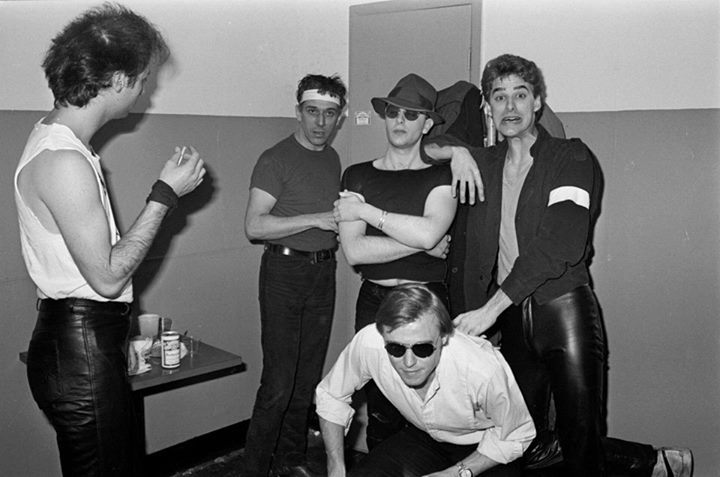
Cale and his band backstage
It’s hard not to respect John Cale for sticking to his guns and maintaining his musical identity – even in the face of being kicked out of a popular band and losing out on the trappings that come with commercial success. And despite the fact that he would never achieve the same acclaim and popularity of Lou Reed, he did about as much with his career as he possibly could given the type of music he wanted to create, and has an extremely strong and critically respected discography. But what it comes down to is that he and Reed just wanted different things, and ultimately both achieved what they wanted to achieve. Reed of course is one of the biggest icons in rock music history, but Cale never gave in and gave up his lunacy. And after an eighteen-year estrangement, the duo would end up re-uniting in 1990 for a collaborative record called Songs for Drella, paying tribute to their mutual friend and mentor Andy Warhol, who had died three years prior. Unsurprisingly, Cale has since said he resented the way that Reed took over the project, so I guess some things never change.

 80 Albums of the 80s
Leave a reply to East Side Story – Squeeze (1981) – 80 Albums of the 80s Cancel reply