Flesh + Blood – Roxy Music (1980)
November 22, 2024
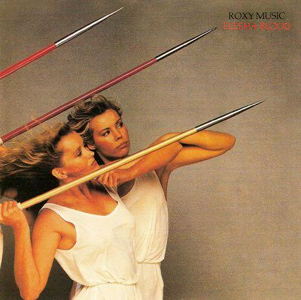
Roxy Music is a rare case where a band has three distinct iterations that are all successful in their own unique way. From 1972-73, the band included a young Brian Eno and took a much more experimental and artistic approach to their records, leading to an eventual showdown with Bryan Ferry over their vision for the band’s future. Ultimately, Ferry would win out, Eno would move on to pursue a solo career, and Roxy Music would go on a successful three-album run from 1973-75 where they would reach the pinnacle of their critical and commercial success. But of course, a lead singer’s ego is a powerful thing, and the group would disband shortly after while Ferry put his solo career to the forefront for the next couple years.
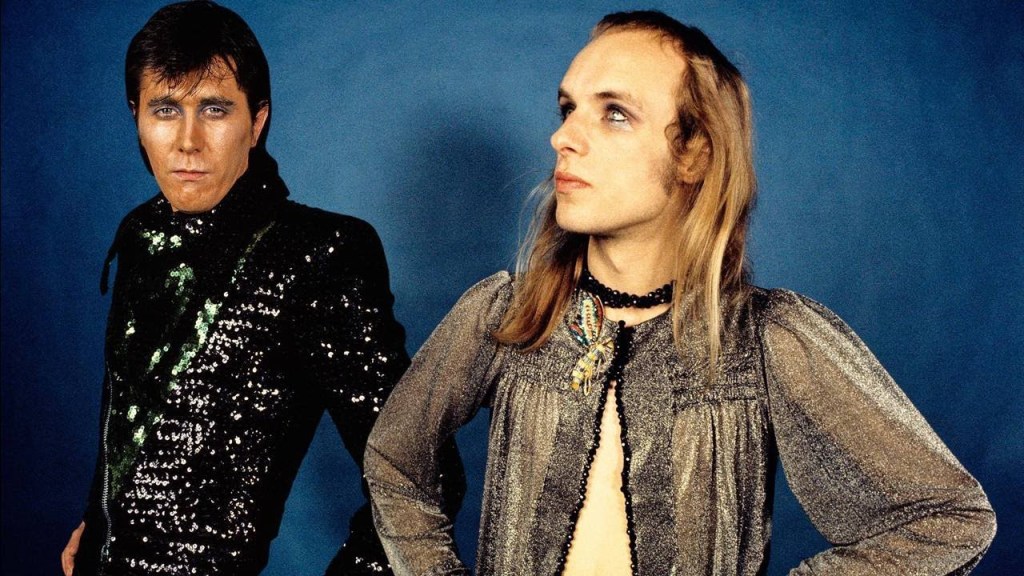
Bryan Ferry and Brian Eno in the early days of Roxy Music
But in 1979, Roxy Music reunited to begin their third and final act with the release of Manifesto, which demonstrated a shift toward a smoother, less improvisational style that leaned into the disco and new wave hits dominating the airwaves. The album succeeded commercially (as many of their prior albums had), but received less critical acclaim and resulted in accusations that the band had sold out. Despite that, the remaining trio of Ferry, guitarist Phil Manzanera, and saxophonist Andy Mackay remained steadfast in their new vision for Roxy Music. So in 1980, the group released Flesh + Blood, and doubled down on the smooth, melancholy disco sound prevalent throughout their prior release. The reactions were understandably mixed given the very nature of what the band was trying to do – the album was a bit too disco and a bit too commercial for music critics and lovers of their earlier work, while also coming across as a little too artsy and a little too sad for the disco crowd. But despite that, the album still did extremely well commercially – peaking at #1 in the U.K. and #35 in the U.S.
The throughline of Flesh + Blood is the lack of personal fulfillment in a glamorous life of fortune and fame, which was clearly a form of autobiographical therapy for Ferry. “My Only Love,” “Over You,” and “Running Wild” are haunted, hopeless tales of lost love and the ensuing attempts at self-delusion that follow. Ferry wistfully croons on the final verse of the album’s final track, “If only dreams came true, I could even pretend that I’ll fall in love again.” Elsewhere on the album, the listener enters Ferry’s world of excess and disappointment – the aging, bored narrator of “Same Old Scene” takes stock of the superficiality and shallowness around him; “Rain Rain Rain” highlights the one-track mindedness that comes with drug addiction; and “No Strange Delight” details the isolating impact of hyperfixation and obsession. But despite the heavy themes and dark undertones of the album, the music behind the message is extremely danceable and upbeat at times. “Same Old Scene” is undeniable disco gold, and “Over You” features a perfect pop melody that stays in your head for hours after you stop listening. Ferry and company are also able to make two covers – Wilson Pickett’s “In the Midnight Hour” and The Byrds’ “Eight Miles High” – sound like Roxy Music originals and blend them in thematically and musically with the rest of the album.

Roxy Music V3: Andy Mackay, Bryan Ferry, and Phil Manzanera
When I listened to this album right before writing this, I found myself for the first time noticing a lot of parallels with Steely Dan’s Gaucho, which was released less than a year later. Flesh + Blood features an aging Ferry lamenting about lost love and finding less solace in his luxurious, but lonely lifestyle. Behind the danceable disco beats and upbeat pop melodies is a sinister sleaziness that drips off his every word. You can feel the disappointment and weariness of a man in his mid-thirties who has been sleepwalking through his elegant, excessive lifestyle and knows that he’s fast approaching the end of his prime. While it’s understandable that the Roxy originalists and Eno sympathizers would detest this album, I think they miss its point on a fundamental level. This album is supposed to be decadent and purposely leans into its plasticity – it is an album about Ferry; it is an album about 1980; it is an album about an aging rock band deciding to follow the lead of the new guard instead of fighting against it in futility. Roxy Music maintains their musical integrity and the uniqueness of their sound, while adapting to the world around them. They do it exceptionally well – even better than they had one year prior – but not quite as perfectly as they would two years later…

 80 Albums of the 80s
Leave a reply to East Side Story – Squeeze (1981) – 80 Albums of the 80s Cancel reply