Hotter Than July – Stevie Wonder (1980)
November 8, 2024
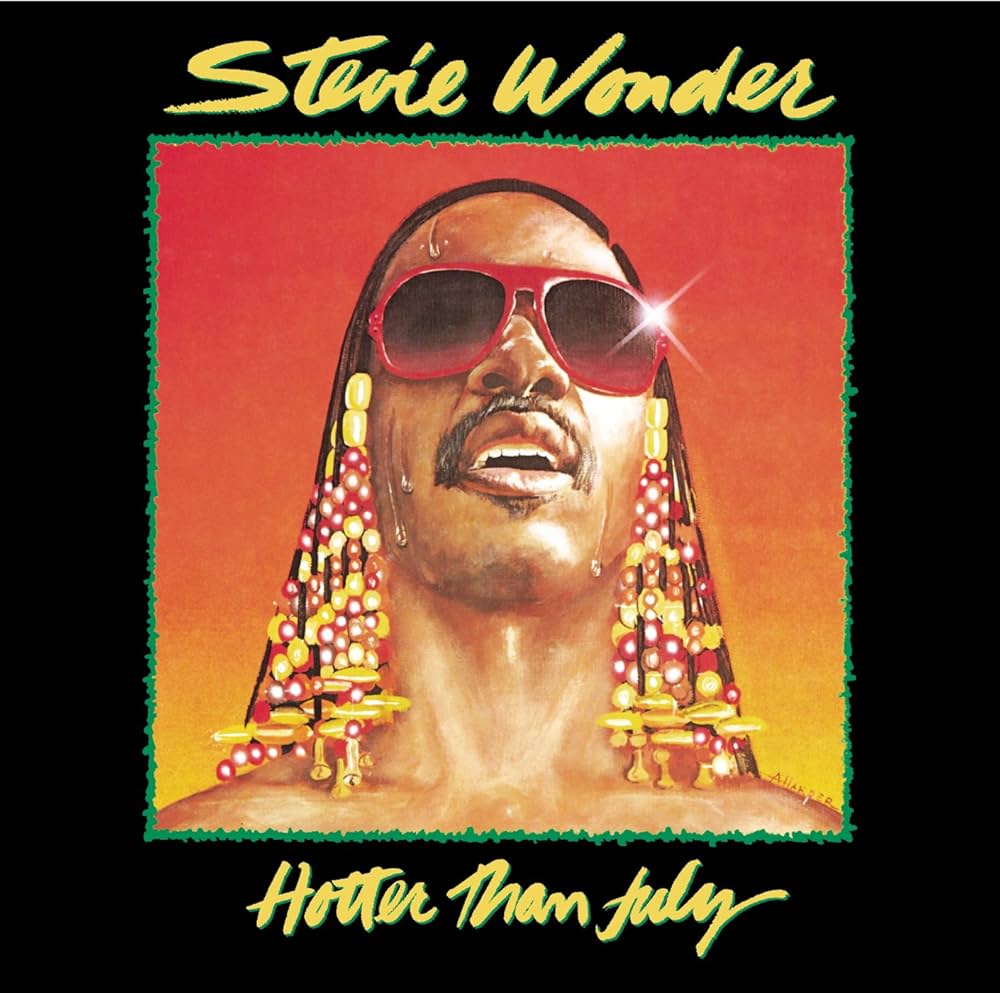
Stevie Wonder’s run in the 1970s was something that had never been done before and will never be matched again – releasing a collection of hit parade records that included Signed, Sealed & Delivered, Talking Book, Innervisions, and his magnum opus Songs in the Key of Life. But after his lackluster final album of the decade, Stevie Wonder’s Journey Through “The Secret Life of Plants,” he needed a bounceback album to show that he was still among the biggest superstars in pop music.
As a result, Stevie decided to pull out the big guns and team up with some of the preeminent R&B stars of the era for his next record, Hotter Than July. Wonder’s supporting cast on the album included Eddie Levert and Walter Williams of the O’Jays, Charlie and Ronnie Wilson of the Gap Band, his ex-wife Syreeta, and his musical heir apparent – Michael Jackson. With their help, he again showed his mastery of putting together no-skip collections that stayed faithful to the R&B genre while achieving smash hit status on the charts, and Hotter Than July would go on to be Wonder’s first album to go platinum. Throughout the record, you can hear Wonder successfully meshing with the sounds of the time – “Did I Hear You Say You Love Me” has the funky danceability of an Earth, Wind & Fire hit, “Rocket Love” feels like a breathy Michael Jackson ballad, and “Do Like You” sounds very similar to Jackson’s 1979 mega hit “Don’t Stop ‘Til You Get Enough.”
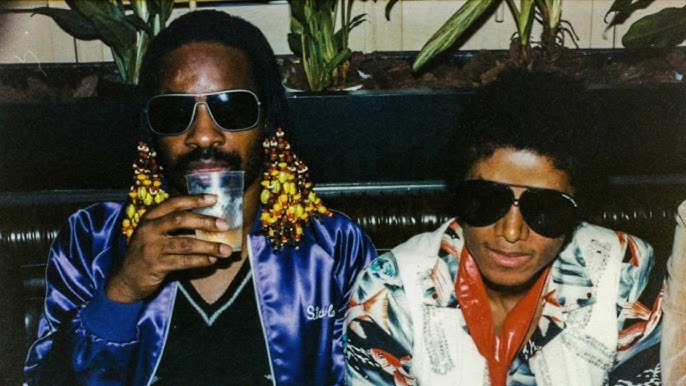
Wonder and Jackson
On top of the commercial success of the record, it was also a very personal one for Wonder, as he paid homage to two men who he clearly had deep reverence for – Martin Luther King, Jr. and Bob Marley. Released twelve years after King’s murder, “Happy Birthday” was written not only to honor the face of the civil rights movement, but also to actively campaign for his birthday to be recognized as a federal holiday. The song was not only a hit on the R&B charts, but ultimately contributed to Ronald Reagan declaring January 15 a national holiday three years later. “Master Blaster (Jammin’),” meanwhile, directly samples Bob Marley and the Wailers’ 1977 hit, “Jamming,” and makes several references to the most notable reggae star of all time. And in addition to paying tribute to Marley’s success up to that point, it was released less than a year before his untimely death in 1981, and would end up serving as a sort of preemptive tribute to his extraordinary life.
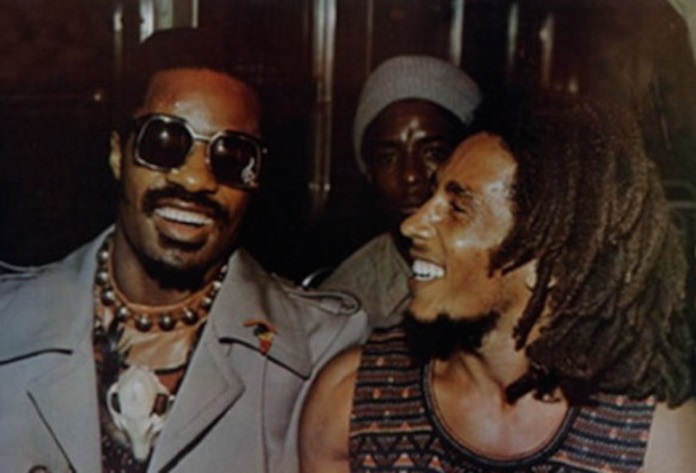
Wonder and Marley
With the success of Hotter Than July, Wonder cemented himself as one of the rare artists who could achieve commercial success and critical acclaim on masterpiece albums released over the course of three separate decades. To his credit, after taking a slight dip (for his standards) with his prior record, he was able to use his existing excellence to adapt with the changing music landscape. He was very clearly inspired by the pop acumen of Michael Jackson, with Jackson’s sound (and literally his voice) serving as a major contributor to this album’s greatness. To me, this highlights the give and take relationship of musical influence that can be seen throughout the history of pop music. Early in his career, Jackson was often compared to Wonder by music critics, and even brought him in as a co-writer on “I Can’t Help It” from his 1979 classic Off The Wall. Rather than fighting against the changing of the guard as he entered the new decade, Wonder actually used his admiration for his successor as a way to step up his own game. And that’s where the all-time greats separate themselves from the all-time goods – with an ability to keep growing, adapting, and changing as the music industry around them evolves. Instead of resenting their younger peers, they follow them and become better artists because of it. Michael Jackson was lucky to have Stevie Wonder; Stevie Wonder was lucky to have Michael Jackson; and we’re all lucky to have so many classic albums from these two masters of pop music.

 80 Albums of the 80s
Leave a reply to I Feel for You – Chaka Khan (1984) – 80 Albums of the 80s Cancel reply