Autoamerican – Blondie (1980)
October 11, 2024
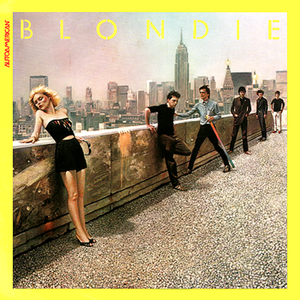
Building on the momentum from their first two albums – which while receiving critical acclaim, had not been massive hits – Blondie launched into superstardom with their release of 1978’s Parallel Lines. With hits including “One Way or Another,” their cover of “Hanging on the Telephone,” “Picture This,” and their #1 mega-hit “Heart of Glass,” they had become one of the biggest bands in both the UK and the US. But despite the success of that album, they sputtered a bit with their 1979 follow-up, Eat to the Beat, which was panned for being a bargain bin version of their prior release. Clearly taking this criticism to heart, Blondie took things in a different direction in 1980, releasing an artsy concept album that brought together a wide array of influences that included jazz, funk, musical theater, and notably the early iterations of hip-hop.
The central theme of Autoamerican – which was originally supposed to be called Coca Cola before the corporation vetoed the idea – is the significance of automobiles in American culture and their ability to serve as the perfect allegory for human desire. This theme is never more clear than on “Call Me,” which actually wasn’t included on the album’s initial release. Co-written with Giorgio Moroder as the theme for Paul Schrader’s 1980 classic, American Gigolo, this song would prove to be the perfect encapsulation of all that would come in the following decade. The film’s intro features prime Richard Gere dawning a Giorgio Armani suit, as he cruises around Los Angeles in his Mercedes Benz with “Call Me” blaring through the speakers. No scene in any movie has ever more perfectly portrayed the seedy, glamorous excess of the 1980s, and “Call Me” serves as the most fitting soundtrack for the feelings the viewer experiences while watching and secretly envying Gere’s Julian Kay. The song, the film, and its opening sequence show the prescience of Schrader, Moroder, and Blondie, who clearly see everything that was to come over the next ten years.

Richard Gere as Julian Kay in American Gigolo
In addition to their #1 hit, the album is filled with other references and homages to the automobile. The record’s opening track, “Europa,” begins with a electronic instrumental sequence that leads into Debbie Harry’s spoken-word delivery:
Based on the desire for total mobility and the serious physical pursuit of religious freedom, the auto drove mankind further than the wheel, and in remote areas even today is forbidden as a device too suspect for human conveyance. This articulate conception has only brought us all more of the same – thoughtlessly locked into phase two gridlock, keyed up, on its rims and abandoned on the expressway.
Harry and her band mates also incorporate this theme into songs like “Go Through It” and “T-Birds,” which feel like their new wave answer to the nostalgically romantic, car-focused lyrics that Bruce Springsteen had perfected throughout the 1970s. But the record’s musical high point undoubtedly comes with “Rapture,” which would become the first ever rap song to reach #1 on US charts. Harry’s bizarre lyrics about men from Mars eating Cadillacs, Lincolns, Mercurys, and Subarus overlay a classic disco beat and cement the band’s legacy as innovators in the future of pop music. Elsewhere on the album, we get several odes to musical theater with “Here’s Looking at You,” “Faces,” and their cover of “Follow Me” from 1960’s Camelot. And one of the most well-known tracks from the album (and the entire Blondie discography) is their rendition of the Paragons’ rocksteady track, “The Tide Is High,” which would go on to be Blondie’s third #1 hit in the US.

Andy Warhol’s portrait of Harry
The success of Autoamerican comes from the fact that Blondie truly offers something to everyone who listens to it. Followers of their early run of albums get treated to the new wave and post-punk jangly guitars that were a part of their original sound, disco fans get danceable beats and catchy choruses, and even musical theater nerds get some rare representation on a mainstream rock record. But even more than the music itself, audiences get Debbie Harry at the peak of her powers. Harry’s sex appeal and natural charisma draw all eyes to her as the punk rock parallel to Marilyn Monroe, and the fairer sex’s answer to the typical male frontman. Her voice and aesthetic are mysteriously captivating – she draws you in with her undeniable allure, and you have no choice but to stay when you realize that the quality of the music can back it up. Blondie isn’t just a band – it’s a persona, and there’s no denying the fact that Blondie is Harry, and Harry is Blondie.

 80 Albums of the 80s
Leave a reply to Tom Tom Club – Tom Tom Club (1981) – 80 Albums of the 80s Cancel reply