McCartney II – Paul McCartney (1980)
September 27, 2024
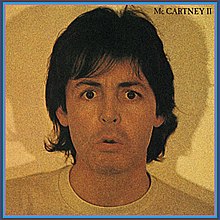
I’ve heard a lot of baby boomers say that the 1980s were where the rock stars of the 60s and 70s went to die, and accuse their favorite artists of selling out to make commercially successful music at the expense of their musical integrity. So what happens when a universally beloved musical genius – who not only was one of the faces of the most iconic band of all time, but also happened to have a wildly successful second act of his career with Wings – enters a new decade and a completely transformed musical landscape? We get McCartney II, where we see Paul do the nearly impossible task of simultaneously staying true to his earlier work while also meeting the moment and embracing the polarizing sounds of new wave.
McCartney and Wings had just come off of 1979’s Back to the Egg, which not only failed to achieve the commercial success of prior Wings albums, but was also widely reviled by music critics. Shortly thereafter, Paul decided he would go to his farm in Scotland to work on some experimental sounds sans his Wings bandmates, but later re-grouped with the band for their UK tour in late 1979 – which was then expanded to go worldwide the following year. In January 1980, Japan had finally decided to let McCartney perform after years of banishment due to his prior arrests for marijuana possession. Despite this, Sir Paul decided not to learn his lesson even a little bit and was arrested in Tokyo upon arriving with nearly eight ounces of weed, leading to a nine-day stint in jail and ultimately the cancellation of the tour. He then decided to put Wings on-hold (permanently it would turn out), and return to Scotland to release the music he had worked on alone prior to the least scandalous drug scandal in rock and roll history.
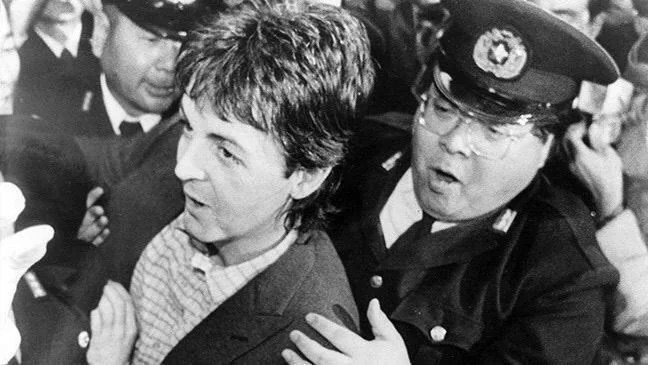
McCartney is arrested in Tokyo
McCartney had seen the growing popularity of new wave in the late 70s and even acknowledged his admiration for David Byrne – leading him to embrace the synthy sounds that had changed a formerly guitar-centric rock genre. He performed all instruments on the album himself – parts of which he recorded on microphones in his bathroom and kitchen – and decided to release it as the official follow-up to his lone solo record, McCartney, which had come out exactly a decade prior. Despite initially receiving negative critical reactions, McCartney II later developed a cult following and has since gotten its proper due as a precursor to a lot of the best pop music of the decade.
The album is at its most experimental and innovative in songs like the bizarre, but extremely catchy “Temporary Secretary,” which features a nasally, robotic chorus that will frequently pop into my head without warning. The song’s genuinely funny lyrics include Paul requesting “someone strong and sweet fitting on my knee” while also acknowledging “how hard it is for young girls these days in the face of everything to stay on the right track.” McCartney also demonstrates his commitment to the synthesized sounds of the era with the instrumental tracks “Front Parlour” and “Frozen Jap” – both of which sound as if New Order wrote and performed the music for a Nintendo game. The album also features songs that sound like they could have come straight from the Beatles discography, including “On the Way,” “Waterfalls,” “Summer’s Day Song,” and “One of These Days,” as well as clear homages to the pioneers of rock and roll, like the Elvis-inspired “Bogey Music.” The highpoint of McCartney II is undoubtedly the album’s first track, “Coming Up,” which is a masterpiece of pop music songwriting that features a perfect blend of new wave instrumentals, a catchy chorus, and the signature Little Richard-esque flourishes prevalent in so much of the early work of the Beatles.
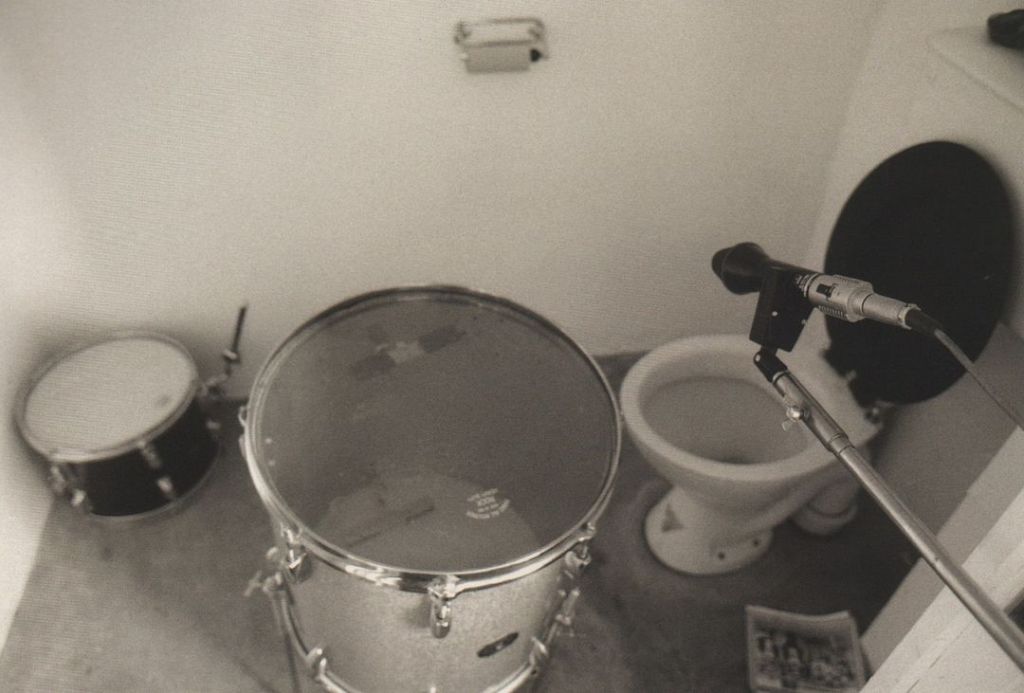
McCartney’s bathroom and recording studio
Admittedly, I always used to be the contrarian who would say that George was actually the best Beatle. I now see that as much as I love George, he clearly is not. It’s Paul. It’s always been Paul. It always will be Paul. McCartney II shows off his well-established abilities at writing perfect melodies, while demonstrating his knack for adapting with the times in a way that doesn’t feel forced or unnatural. It rivals some of the best comparable work that was being released at the time and serves as inspiration for much of the music that would follow it – resulting in one of the most underrated and underappreciated albums of the 1980s. To me, it is clearly his best true solo record, and joins Ram and Band on the Run as the signature albums in his post-Beatles Paul of Fame.


 80 Albums of the 80s
Leave a reply to Thriller – Michael Jackson (1982) – 80 Albums of the 80s Cancel reply