Gaucho – Steely Dan (1980)
September 13, 2024
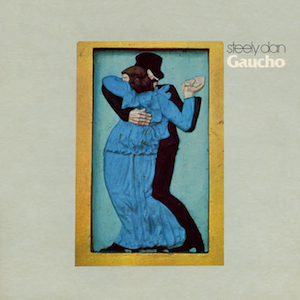
I’m kicking off this eighty-blog series with arguably the most meaningful, important, and easy album for me to write about – Steely Dan’s 1980 masterpiece, Gaucho. The seventh and final record of Steely Dan’s original run, which kicked off with 1972’s Can’t Buy A Thrill, caps off a near-perfect decade-long discography and serves as the perfect transition for rock music in the 1980s.
The production of this album encapsulates the increasingly Type-A, neurotic studio perfectionism that Donald Fagen and Walter Becker had begun to pursue in 1974 after the release and accompanying tour of Pretzel Logic. From that point forward, the duo’s goal was not to be arena-headlining rock gods, but rather the architects of sonically perfect albums that could act as a delivery vehicle for their sad-sack anti-heroes. After the success of Katy Lied, The Royal Scam, and most notably Aja, Fagen and Becker had understandably reached burnout and begun to see their personal lives and working relationship disintegrate. In the throes of heroin addiction, Becker was living through a truly all-time rock bottom – he had broken multiple bones after being struck by a car and was being sued by his deceased girlfriend’s family after she had overdosed on the very drugs he had introduced her to. Despite this, the show rolled on in typically Dan-ish fashion with obsessively grueling studio sessions involving countless takes. In addition to the usual suspects of Steely Dan’s roster of session musicians, including the magnificent Bernard Purdie, The Dan enlisted the help of Dire Straits’ frontman and lead guitarist, Mark Knopfler. On working with Fagen and Becker, Knopfler described the experience as being “like getting into a swimming pool with lead weights tied to your boots.”
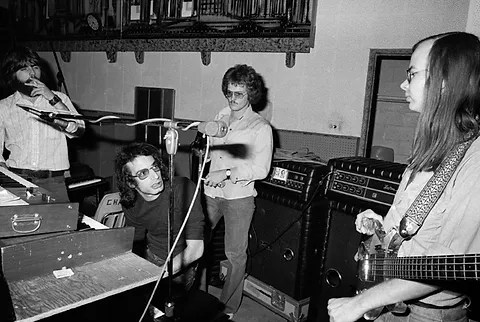
Michael McDonald, Donald Fagen, Tim Weston, and Walter Becker recording in studio
But as difficult and arduous as the production may have been, it’s impossible to deny the results. Each song on this album perfectly encapsulates the elegantly sleazy excess of Los Angeles in the late 1970s. In addition to the melodic malaise that drips throughout songs like “Babylon Sisters,” “Hey Nineteen,” and “Gaucho,” we meet some of the quintessential Steely Dan characters like Jive Miguel and Hoops McCann in their coke-laced fable, “Glamour Profession.” These songs take us into what may appear to a naive onlooker as a mecca of sunshine and seduction, but we soon realize that everything is not what it seems. Our pathetic, aging protagonists drift through this world with a desperate desire to cling to the very excesses that are making them miserable. The consequences of this lifestyle and its trappings are never more clear than when we hear the narrator of “Babylon Sisters” begging to be told that he is “the only one,” and when the grown man who is romantically pursuing a teenager prays that a combination of tequila and drugs will “make tonight a wonderful thing.” The listener can smell the smoke-filled cocktail bars, taste the bitterness of overpriced mixed drinks, and hear the idle chatter of the vapid LA socialites that surround these stories. Becker and Fagen bring you into their world and uncover the filth that lies beneath the veneer of luxury and lavishness.
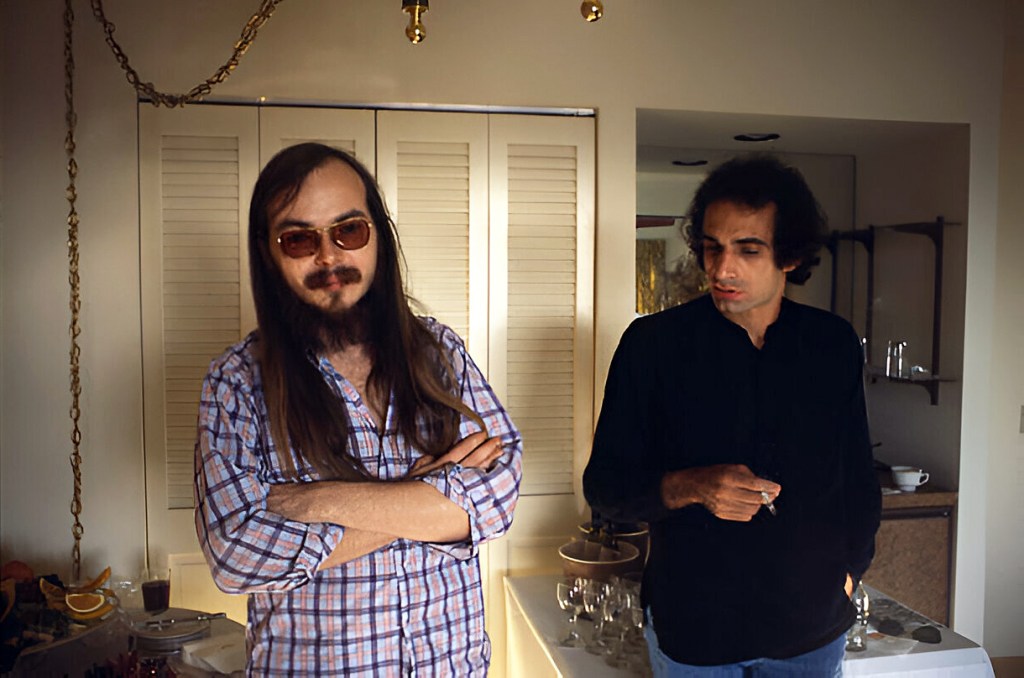
Becker and Fagen in Becker’s Los Angeles home
Released when Fagen was 32 and Becker was 30 – this album is the perfect illustration of the aging loser who is coming to terms with the expiration date of his youth. Too old to get any solace from the liquor soaked lifestyle of the LA party scene, and too young to accept the mundanity and tedium of settling into middle age, Gaucho’s leads look out at the sun setting over the Pacific Ocean and think, “Now what?” And on a level much broader than any one person, Fagen and Becker watch on as the world approaches the excess and decadence of the 1980s. They see what’s coming because they’ve been living it. They know the temptations because they’ve succumbed to them. They know what this road leads to because they find themselves standing at its dead end.
As a thirty one-year-old man living in a world hyper-focused on appearance and status, I have a connection to this album like no other. I feel this album to my core every time I listen to it, as the characters and circumstances become more and more recognizable. Despite the joy I experience whenever I listen to this album, I always find myself with the same thought after its conclusion:
Now what?


 80 Albums of the 80s
Leave a reply to Avalon – Roxy Music (1982) – 80 Albums of the 80s Cancel reply