I’m Your Man – Leonard Cohen (1988)
February 20, 2026
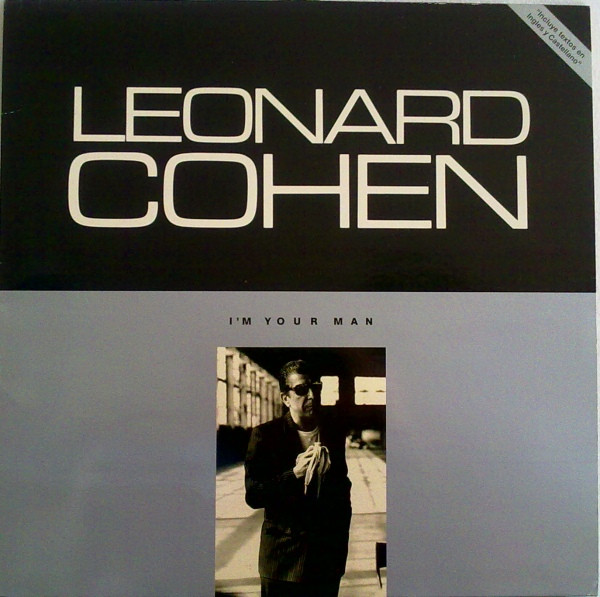
Leonard Cohen spent the early part of his life as a writer in Canada, dedicating himself to composing poems and novels throughout the 50s and 60s. But by 1967, he had become frustrated and disheartened by his lack of success and decided to move to the United States to pursue a career as a folk singer and songwriter. In his formative years as a performer, he got acquainted with some of the members of Andy Warhol’s crew and became deeply inspired by the music of Nico, giving him some of the needed connections and direction to get his career off the ground – earning his first songwriting hit with Judy Collins’ cover of his song, “Suzanne.” But as the 60s moved into the 70s and folk became a relic of a different era – with even Bob Dylan distancing himself from the genre in 1965 – Cohen would move toward a more complex musical style and an embrace of a more modern sound with 1977’s Death of a Ladies’ Man. His notable shift in style would continue to progress into the 80s, with Cohen earning his highest level of success to date with the release of 1984’s all-time classic, “Hallelujah,” which would reach #59 on the Billboard Hot 100 and go on to become a staple of movie and television soundtracks.
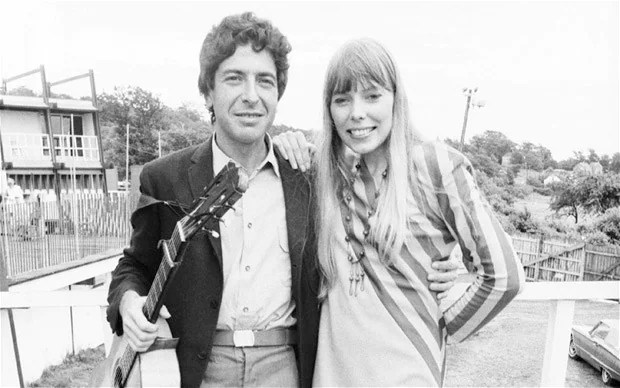
Cohen and Joni Mitchell
From there, Cohen would take the biggest swing of his career with his follow-up release – 1988’s I’m Your Man. On top of the fact that Cohen fully embraced the use of synthesizers and drum machines for the first time, he also took on production work for the album to ensure that he was able to achieve his intended vision. And understanding that he needed to stay true to form and not completely disregard what had made him a beloved cult performer in the first place, he mixed the more modern synth-based arrangements with the Eastern European instrumental sounds that he had used to much success in prior releases. As a result of his shift in composition style, along with the fact that he would later claim his gravelly, baritone voice had never sounded better at any point in his career, I’m Your Man would become his biggest success to date – earning immense critical praise and reaching #34 on the Billboard 200.
The distinct vocal style that became the calling card of all Cohen’s releases is enhanced throughout the record by the use of six different female singers, who at different points serve as refreshing supplements to his quasi-spoken word delivery. And always known for his poetic, poignant lyrics, Cohen delivers at as high of a level as any point in his entire career. His keen eye for the rapidly deteriorating social fabric and increasingly fraught geopolitical situation of the late 80s is at its best on “First We Take Manhattan” and “Everybody Knows,” where he tackles terrorism, drug use, AIDS, and the litany of broken institutions in the West – never more succinctly than when he croaks, “Everybody knows that the dice are loaded. Everybody rolls with their fingers crossed. Everybody knows the war is over. Everybody knows the good guys lost. Everybody knows the fight was fixed. The poor stay poor, the rich get rich. That’s how it goes. Everybody knows.” But on top of his panoramic view of the outside world, Cohen gets introspective and personal with the brooding stories of romance on “Ain’t No Cure for Love” and “I’m Your Man,” as well as nostalgic reflections on his life and his legacy with “I Can’t Forget” and the “Tower of Song.”
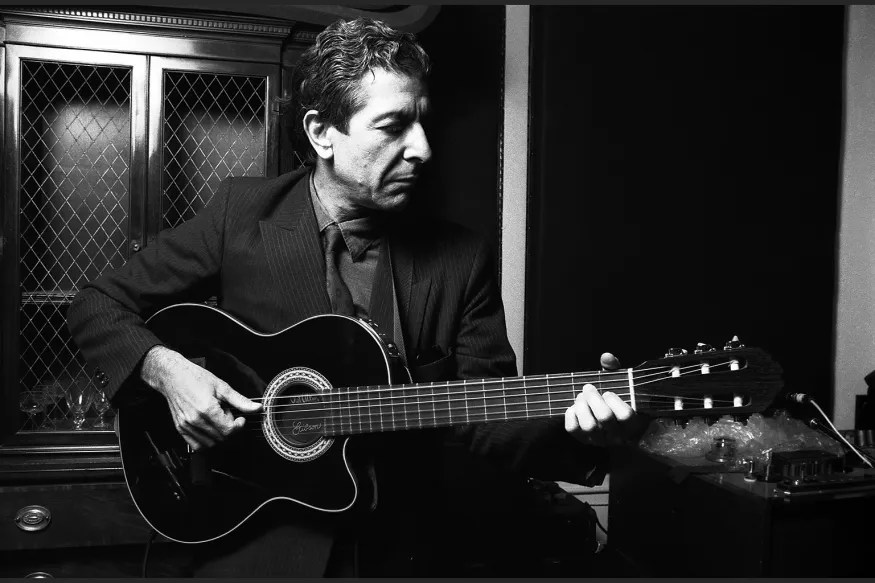
An older Cohen at a new stage of his career
For the vast majority of his recording career, it was clear to anybody listening that Leonard Cohen was more of a poet than he was a musician. But having entered his fifth decade of life and carrying with him a heavy load of experiences and baggage, it’s clear he was ready to move on from the past and embrace the future with I’m Your Man. On top of the obvious pivot in his sound and budding use of electronic instrumentals, the listener can hear his exhaustion with what’s been and his desire to move forward with what’s next. And the seemingly odd combination of Cohen’s old school vocal delivery, plus the far more contemporary arrangements and backing vocalists who fit the pop music landscape of 1988, would lead to the most complete, accessible, and ultimately best work of his entire discography. Whether viewed as the death of the old Leonard, or perhaps the birth of the new, I’m Your Man is clearly a pivotal turning point in the life of one the great songwriters and the clear precursor to his next great work that would come in 1992 – aptly titled, The Future.
 80 Albums of the 80s
Leave a comment