Appetite for Destruction – Guns N’ Roses (1987)
January 23, 2026
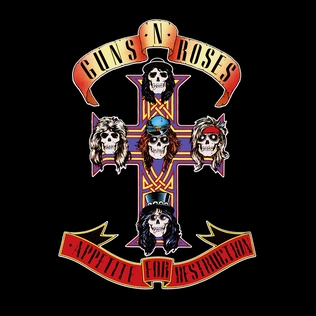
Axl Rose and Izzy Stradlin spent the mid-80s toiling through several fits and starts in their numerous attempts to form a dream team of rock performers. They would start with a band called Hollywood Rose (which would go through several lineup changes, including the addition of a very impressive guitar player who went by “Slash”), move on to another called L.A. Guns, and then eventually reach their ultimate destination – Guns N’ Roses. After settling on a lineup that would consist of Rose, Stradlin, and Slash – along with bassist Duff McKagan and drummer Steven Adler – the band began to gain some attention on the Sunset Strip club circuit (which had become the hub for the increasingly popular hair metal scene). And after signing with Geffen Records, the band put out their first EP, Live ?!*@ Like a Suicide (which was recorded in a studio and overdubbed with crowd noise to mimic an actual live performance), paving the way for their 1987 debut album – Appetite for Destruction.
After recording their faux live EP on their own, the band realized that they needed a legitimate producer to ensure that their debut album would be a success. They went through a long tryout period that included bringing in Nazareth guitarist Manny Charlton, Paul Stanley of KISS, and Mutt Lange (who had a production resumé far too impressive for the band to afford). Instead, they’d go with an up-and-comer named Mike Clink and begin a scrappy recording process that would include splicing together the best takes with a razor blade. Clink and the rest of the band would also get acquainted with the perfectionism and pickiness of Rose, who insisted on recording each of his lines one at a time to ensure that they were up to his very high standards.
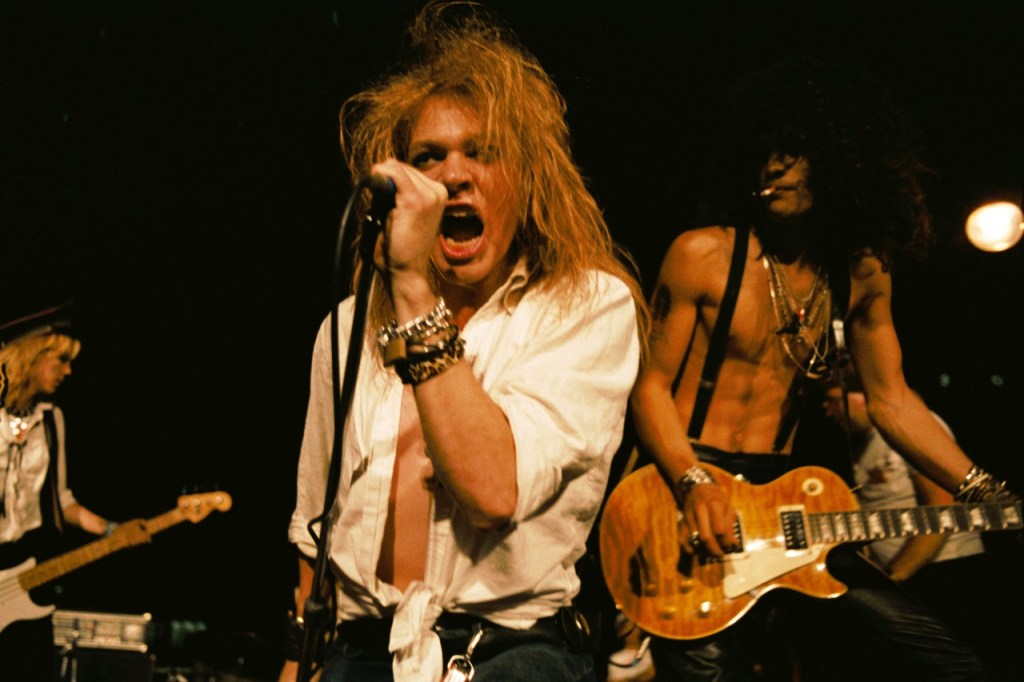
Axl Rose and Slash on stage in the band’s early days
Despite their best efforts to hit the big time, Appetite for a Destruction initially appeared to be a flop – only reaching #182 on the Billboard 200 and getting panned by critics who thought the release was too similar to the work of Aerosmith and AC/DC. But just as the record label was ready to give up on Guns N’ Roses and their debut album, Geffen’s general manager Al Coury was able to convince MTV to play the music video for “Welcome to the Jungle” once a night for three nights as a last-ditch effort to save the record. And much to the surprise of MTV, the label, and even the band – the song would become the most requested video on the network and pave the way for Coury to pitch “Welcome to the Jungle,” “Sweet Child o’ Mine,” and “Paradise City” to radio stations. And as a result of the lethal combination of MTV popularity, radio airplay, and an accompanying tour that was quickly gaining momentum – Appetite for Destruction would shoot to #1 over a year after it was released. Its three singles would also find enormous success on the Billboard Hot 100, with “Sweet Child o’ Mine” hitting #1, “Paradise City” peaking at #5, and “Welcome to the Jungle” reaching #7. And to this day, Appetite is not only the best selling debut of all time, but also one of the best selling albums to ever be released (slotting in between Nirvana’s Nevermind and Bruce Springsteen’s Born in the U.S.A.).
From the moment the album begins with the gritty opening riff to “Welcome to the Jungle” – Guns N’ Roses announce they are a force to be reckoned with whether you like them or not. Their blend of a glam aesthetic with more intricate, bluesy guitar work and a punk rock attitude make them seem a hell of a lot cooler (and far more musically gifted) than the likes of Mötley Crüe, Poison, and Bon Jovi. And while their lyrics center around a lot of the sex, drugs, and rock ‘n’ roll themes that can be found in the music of their peers, Guns N’ Roses distinguish themselves by not making it seem nearly as glamorous and fun as it might appear on the surface. “Welcome to the Jungle” is based on the real life experience of Axl Rose coming to New York City on a bus and having a homeless man say to him, “You know where you are? You’re in the jungle baby. You’re gonna die!” Meanwhile, “It’s So Easy” pulls the curtain back to reveal that having women constantly throw themselves at you gets tiresome and boring; “Mr. Brownstone” highlights the band’s issues with heroin; and the protagonist of “Paradise City” compares the idyllic city where he grew up with the concrete jungle he finds himself in now. And although the album features some horrific lyricism around domestic violence, degrading sex (“Rocket Queen” actually includes an audio recording of Rose having sex with Steven Adler’s girlfriend in the studio), and blatant objectification of women – it’s hard not to acknowledge the band’s signature ballad, “Sweet Child o’ Mine,” is a beautifully written love song that showcases the band’s ability to be more sensitive, emotional human beings.
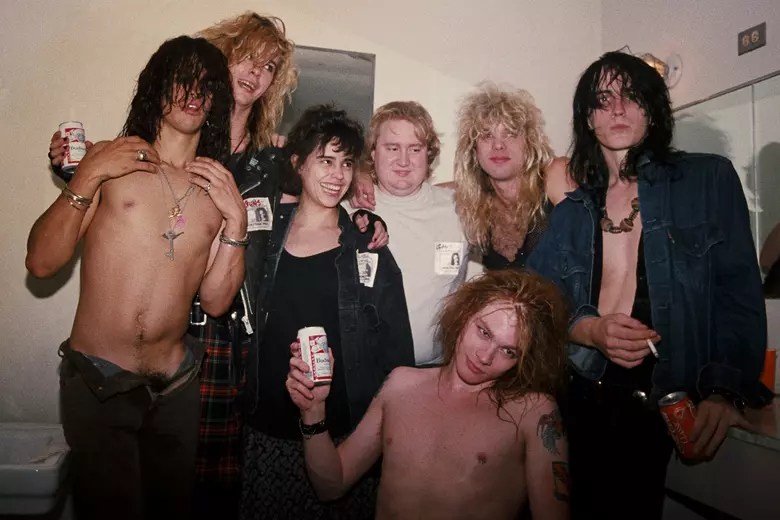
The guys looking extremely sober after a show
With Appetite for Destruction – which is objectively the greatest debut of all time in terms of album sales – Guns N’ Roses brought some balls back to a hard rock scene that had become a made-up, hair-sprayed parody of itself by the late 80s. Their bad boy, “fuck you” image revitalized something that seemed to have been lost with the dissolution of the punk rock scene; and their musical style was a clear-cut turning point in the overall direction of hard rock, which would bridge the gap into the 1990s and pave the way for a lot of the bands still to come. And although this album is really the only one in the Guns N’ Roses discography that I can say I truly love from top to bottom, their next four releases would prove to be massive hits and maintain the band’s status as one of the preeminent rock acts until their extended hiatus in the mid-90s. But Appetite for Destruction’s propulsive, kinetic sound; Rose’s shrieking, rage-filled vocals; and Slash’s signature blues riffs make it an all-time classic that punches you square in the face from the second it starts and keeps you coming back for more until the very end of its final track.
 80 Albums of the 80s
Leave a comment