5150 – Van Halen (1986)
January 9, 2026
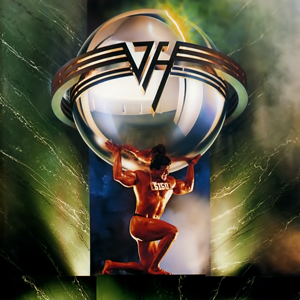
Despite having achieved the highest level of success in their career thus far with Nineteen Eighty-Four – which peaked at #2 in the US and contained a number of hit singles – the David Lee Roth Era of Van Halen had officially come to an end. Due to creative differences with Eddie, Roth had gone off on his own to pursue a solo career with former Van Halen producer, Ted Templeman, and had achieved his own success with his 1985 EP, Crazy from the Heat, and his 1986 debut album, Eat ‘Em and Smile. Eddie and company, meanwhile, were not content to call it a day on Van Halen just because they had lost their lead singer. Eddie had personally reached out to both Daryl Hall and Patty Smyth of Scandal – both of whom declined – and was having considerable difficulty filling the shoes of his former frontman. But as chance would have it, Eddie’s mechanic would end up introducing him to another one of his rock star clients – Sammy Hagar, who had served as the singer of Montrose in the 70s and achieved some recent success with the release of VOA (#32 on the Billboard 200) and his hit single, “I Can’t Drive 55” (#26 on the Hot 100).
Having perfected the lethal combination of his signature hard rock guitar style and pop-oriented synthesizer sound, Eddie knew enough not to completely rewrite the playbook for the band’s next release. Instead, the most notable change for 5150 came not just in Hagar’s vocals, but also in the types of songs that they were writing. Leaning into Hagar’s more earnest and self-serious persona – which was very much at odds with Roth’s clownish antics and eccentric vocals – Van Halen embraced the power ballad at the dawn of their second act. They also made a fairly notable change in the production style, opting for a mix that made Eddie’s guitar playing equal with the rest of the band rather than using the guitar-centric mix of the Templeman years, which was intended to imitate a live sound.
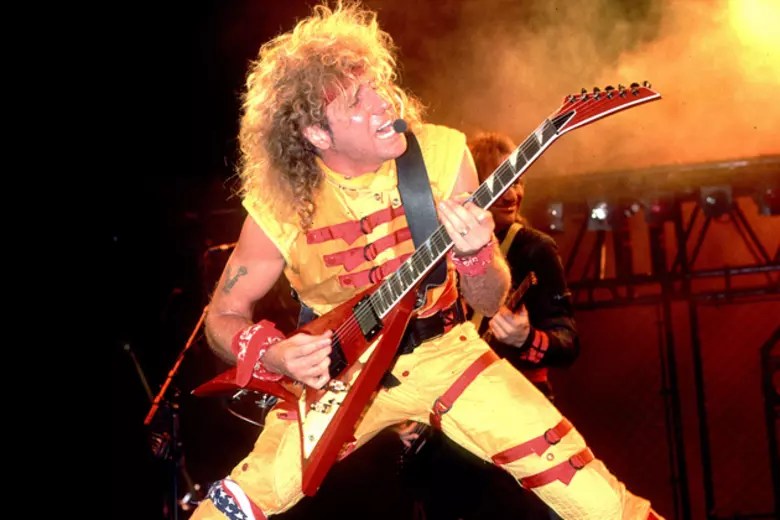
Hagar in his solo years
In spite of all of these changes (or perhaps because of them), 5150 would turn out to be even more successful than anything Van Halen had released in the Roth years. The album would shoot to #1 and feature three hit singles with “Why Can’t This Be Love” reaching #3 and both “Dreams” and “Love Walks In” peaking at #22. And although the album was picked apart by music critics – who were dubious of the band’s fill-in frontman – the new lineup made them more popular than ever and earned them the new moniker of Van Hagar, which Sammy even pitched as the band’s new name (a request that was unsurprisingly denied by Eddie and Alex).
In the album’s lyrics, it’s clear that the band wanted to convince audiences (and maybe themselves) that Hagar had quickly incorporated himself as a true contributor to Van Halen and a fun-loving member of their hard-partying quartet. “Inside” features a spoken word intro where the members of the band riff off of each other’s (usually bad) jokes, while “Good Enough” and “Summer Nights” rely on lyrics that might even make a teenage boy feel gross – comparing women to “grade-A” beef, racks of ribs, and “human toys.” But the best moments on the album come with the more sensitively written power ballads, including “Why Can’t This Be Love,” “Dreams,” and “Love Walks In” – which were unsurprisingly the record’s biggest hits and the tracks that would live on as staples of the Van Halen discography.

Van Halen 2.0
With 5150, Van Halen officially ushered in the Hagar Era and cemented themselves as one of the very few bands to continue to find great success despite a lead singer change (a list that includes the likes of Genesis, the Doobie Brothers, AC/DC, and New Order). On one hand – you’ve got to hand it to them for being able to not only maintain their popularity, but actually surpass it. But on the other – it’s hard not to feel like something was lost with the departure of the kooky David Lee Roth, whose vocal performance, stage antics, and general demeanor made him feel like the band’s official mascot. It’s a little bit difficult to accept Hagar’s attempt to be taken seriously, because ultimately that’s not what Van Halen is all about. To me, the appeal of the Roth Era came from the fact that it was decidedly unserious, and the albums they made were intended to be party music with splashy guitar solos and goofy lyrics. But despite the fact that I’m unabashedly pro-Roth, I give the guys credit for what they were able to do with 5150 and genuinely love about half of the tracks on this record. And regardless of what I (and many music critics) might think of the three additional Van Hagar albums that would follow from 1988-95 – these guys reached #1 four times in a row over the course of nearly a decade.
You can have your opinions on the Roth vs. Hagar debate, but you just simply can’t argue with the numbers – Sammy won, and he won by a lot.
 80 Albums of the 80s
Leave a comment