Boys and Girls – Bryan Ferry (1985)
November 28, 2025
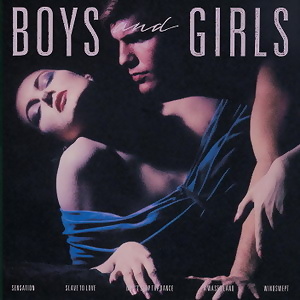
Despite his eight-album run as the frontman and primary songwriter for Roxy Music from 1972-82, Bryan Ferry always made time for his own work, as well. From 1973-78, he released five albums (most of which took place during the band’s four-year hiatus), and established himself as a viable solo artist in addition to being the face of his band. But like a lot of the earlier Roxy Music releases, much of Ferry’s work received critical praise and had a dedicated collection of real music fans invested, but wasn’t exactly lighting it up on the pop chart. In fact, his prior solo album, The Bride Stripped Bare, didn’t chart in the US nor the UK, which would lead him to reunite with his former bandmates and begin the second act of their career.
During Phase II of Roxy Music, their shift toward a sophisticated, but ultimately danceable disco sound would help them become a legitimate pop act – with 1979’s Manifesto reaching #23 in the US, 1980’s Flesh + Blood hitting #35, and Avalon peaking at #53. So once he knew for certain that his days with the band were through, Ferry decided to capitalize on his commercial momentum and newly perfected sophisti-pop sound to release his first solo record in seven years – 1985’s Boys and Girls.
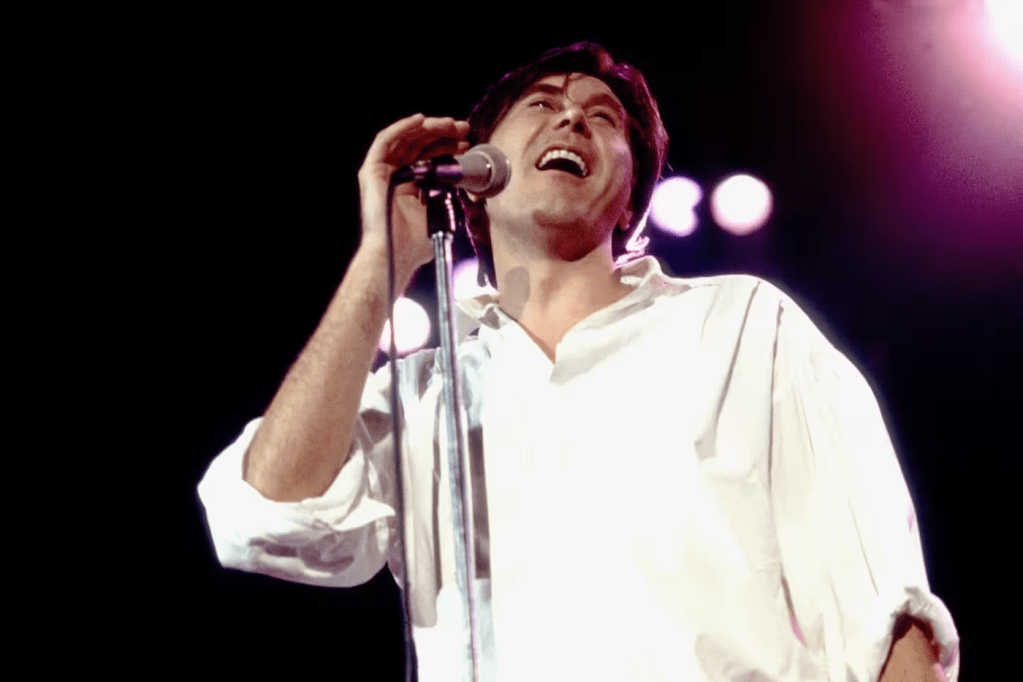
Ferry on stage with Roxy Music in ’83
Knowing that he needed some back-up, given the fact that his musical abilities didn’t go beyond vocals and keyboards, Ferry brought in some of the highest talent of the era to help him out in the studio, including three box office guitarists – Pink Floyd’s David Gilmour, Dire Straits’ Mark Knopfler, and Chic’s Nile Rodgers. He also showed no qualms about using the same highly produced, synth-heavy, melancholy pop sound that had made his prior releases with Roxy Music so successful – and it’s truly hard to look at Boys and Girls as anything but an equally excellent sequel to Avalon. And just like its predecessor, the album would chart at #1 in the UK (the first and only time this happened for a Ferry solo project), while continuing to hover around the middle of the Billboard 200 (with its peak coming at #63).
What’s sort of remarkable about the success of this record is the fact that it really wasn’t based on hits. None of the three singles reached the US pop chart, and “Slave to Love” was the only track to reach the top 10 in the UK (at #10 exactly). But despite the lack of signature singles, the album is filled with truly excellent, catchy pop songs – most notably on the A-side. The first track, “Sensation,” stands out in particular as a pop music masterpiece, and I cannot understand for the life of me why it wasn’t the album’s lead single. And after kicking off Boys and Girls with my clear-cut favorite, Ferry goes back-to-back with “Slave to Love” and “Don’t Stop the Dance,” which both follow the reliable Roxy Music “sad-sack on the dancefloor” template. With these (and many of the other songs throughout the album), Ferry continues to articulate his internal malaise and hidden sadness amidst all of the glitz and glamour of his life of fame and fortune – which I’m certain had only intensified as he was fast approaching his 40th birthday. And he never lyrically nails his thematic throughline better than with the final lines of the entire album (which are fittingly on the title track) – crooning that “death is the friend I’ve yet to meet.”
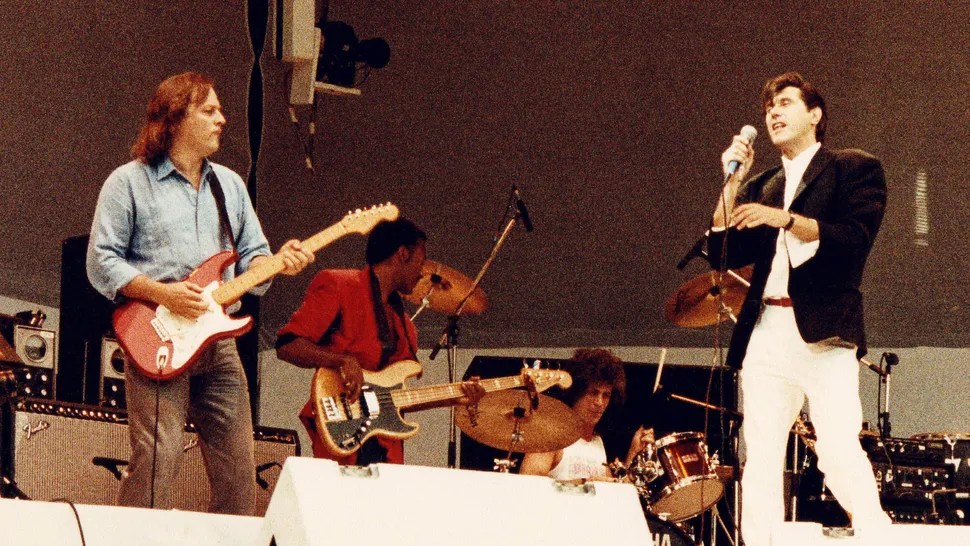
David Gilmour and Ferry perform at Live Aid in ’85
With Boys and Girls, Ferry picked up right where he left off with Roxy Music, and delivered the fourth installment of the sleekly somber sophisti-pop series. Aside from the fact that he continued to get better and better at straddling the fine line between dark and disco, he also benefited from the fact that the music landscape had sort of followed his lead. Ghoulish, glamourous new wave and synth pop acts had flooded mainstream pop music (particularly in the UK), and it’s hard to argue anyone was more responsible for the trend than Ferry himself. And while his lyrics were trending even more toward themes like loneliness and disappointment, the music itself was becoming increasingly in line with the direction of British pop music in 1985, making it a logical next step in his evolution as an artist. The one critique you could make at Ferry (and at this album in particular) is that he doesn’t seem particularly interested in straying from the themes and sound that he established in the late 70s, but from my point of view – that would’ve only been a problem if it didn’t sound so goddamn good.
 80 Albums of the 80s
Leave a comment