Double Nickels on the Dime – Minutemen (1984)
September 26, 2025
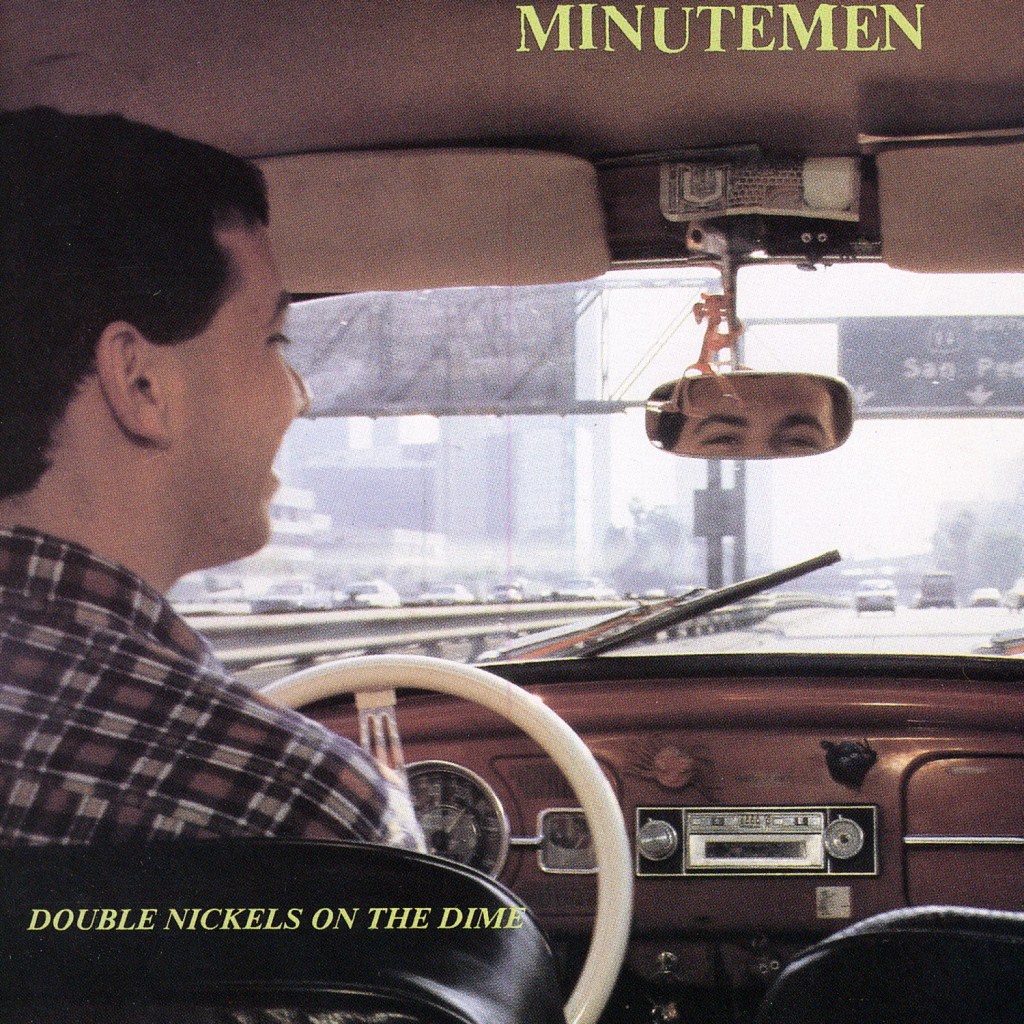
D. Boon and Mike Watt were just two 13-year-old boys in Los Angeles who happened to meet each other while playing in a park. Both kids had a passion for music – specifically for the early punk scene that was emerging as they were growing up – and decided to follow in the footsteps of their heroes and form a band themselves. With Boon on guitar and Watt on bass, the duo would run through the typical fits and starts of short-lived bands that would end up going nowhere until they eventually formed Minutemen alongside drummer George Hurley in 1980.
Given the fact that they were just three young guys in LA who were trying to make it in the hardcore punk scene, the assumption would likely be that they would find themselves on a short-lived path to nowhere (much like they had in the other early iterations of their band) and fizzle out into obscurity. But in a stroke of luck, Minutemen’s very first gig would happen to be opening for Black Flag, who would become not only one of the pioneers of the hardcore genre, but also one of the only groups that would enjoy any sort of mainstream name recognition outside of the scene. And as they continued to hitch their wagon to Black Flag and persistently pursue a grassroots effort to sell their music at shows, they slowly but surely got themselves a little bit of momentum among hardcore fans. In the years that would follow, they would continue to tour with Black Flag – as well as Hüsker Dü, who were a similar case of a hardcore band that had crossed into some mainstream success – and release two studio albums with 1981’s The Punch Line and 1983’s What Makes a Man Start Fires?
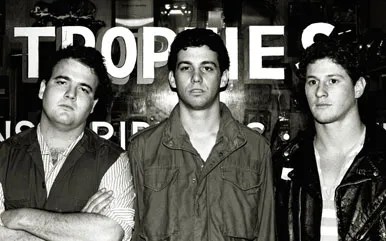
D. Boon, Mike Watt, and George Hurley
Seeing that they had built up some momentum within the hardcore scene, Minutemen would take their biggest leap forward when they would begin recording 1984’s Double Nickels on the Dime – a double album featuring 45 tracks that were mostly under two minutes apiece. Despite having an album’s worth of material ready to go, the band was inspired by Hüsker Dü’s double album Zen Arcade and felt compelled to continue writing to match their fellow harcore stalwarts with some friendly competition (and even included “Take that Hüskers!” in the album’s liner notes). So with a little songwriting help from some of the legends of the scene – most notably Henry Rollins of Black Flag – the band was able to create their car-themed masterpiece for just $1,100.
The album’s title itself tells us a lot about the cynical trio, as it is a play on Sammy Hagar’s “I Can’t Drive 55” (“double nickels” being 55 mph and “the dime” being Interstate 10), which the future Van Halen frontman claimed was a “protest song” about the federally imposed speed limit of 55 miles per hour. Watt would later say in reference to the band’s feelings about Hagar’s song, “the big rebellion thing was writing your own fuckin’ songs and trying to come up with your own story, your own picture, your own book, whatever. So he can’t drive 55, because that was the national speed limit? Okay, we’ll drive 55, but we’ll make crazy music.” And Hagar wouldn’t be the only target in their often biting lyrics, as they would come after the tedium of lazy popular music with “#1 Hit Song,” the performative hypocrisy of pop protest songs with “Political Song for Michael Jackson to Sing,” and the over-saturated new wave genre on “Do You Want New Wave or Do You Want the Truth?” But despite their disdain for some aspects of the music landscape, Minutemen also show their reverence for a number of their heroes on “History Lesson – Part II,” where they pay homage to Eric Bloom of Blue Öyster Cult, Richard Hell of Television, Joe Strummer of the Clash, John Doe of X, and even Bob Dylan. They also include three covers throughout the record, with renditions of Creedence Clearwater Revival’s “Don’t Look Now,” Steely Dan’s “Dr. Wu,” and ironically Van Halen’s “Ain’t Talkin’ ’bout Love” (just one year prior to Hagar becoming their new lead singer).
On top of expressing their thoughts on the music industry, the trio also gets into some heavy political topics throughout the 45 tracks – most notably with a number of critiques on the West’s approach to the Cold War. They go after the Vietnam War on “Viet Nam,” the Berlin Wall on “West Germany,” and the Reagan administration’s support of right wing dictatorships on “Untitled Song for Latin America.” Minutemen also don’t shy away from societal criticism in their takedowns of the ethics of advertising and consumerism on “Shit from an Old Notebook;” the unfair hand that had been dealt to the working class on “Theatre Is the Life of You;” and even their own culpability in being privileged Americans who aren’t really helping anyone with both “Maybe Partying Will Help” and their most well-known song, “Corona,” which you’ll likely recognize as the intro music to MTV’s Jackass.
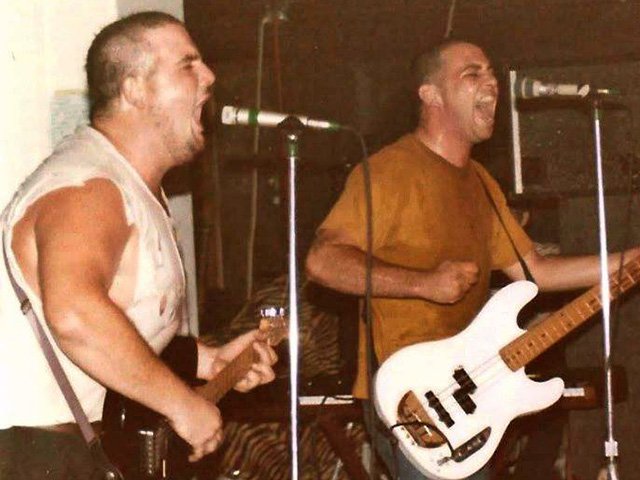
Boon and Watt play an early gig
Despite the fact that Double Nickels on the Dime never had any real shot of becoming a hit album, its legacy has lasted decades as one of the great records to come out during the early years of hardcore punk. Aside from the critical praise for the excellent musicianship and thought provoking lyrical content, it has been credited as being a key moment in moving the genre forward from its more minimalist early days, and is often cited on many of the “Top 100” lists for the 1980s and for punk music in general. Its raw and biting nature was a clear result of the increasing plasticity and cheesiness of the music industry in the mid-1980s, and served as the bridge for an entire generation of artists who would find bigger audiences that were much more receptive to musical experimentation in the following decade. Unfortunately, we’ll never know just how much further Minutemen could have pushed themselves and the entire punk scene, as D. Boon would die at the age of 27 in a van accident in December 1985. But despite the tragic end of such a talented young artist’s life and the cutting short of an incredible band’s potentially prolific career, Double Nickels on the Dime lives on as one of the great achievements in punk rock – especially given its shoestring budget – and as one of the most inspiring, innovative, and unique works of the entire decade.
 80 Albums of the 80s
Leave a comment