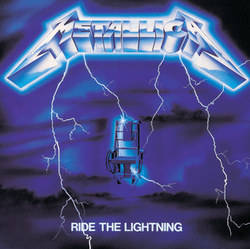
Ride the Lightning – Metallica (1984)
September 12, 2025
Metallica was born in the early 80s, when Danish drummer Lars Ulrich recruited his team of extremely raw – but also supremely talented – metal musicians. The original lineup would consist of singer and rhythm guitarist James Hetfield, bassist Cliff Burton, and lead guitarist Dave Mustaine – leading to the birth of what would become one of the first (and indisputably one of the greatest) thrash bands to enter the heavy metal scene. But when it came time to actually start recording music for their first record – which they wanted to call Metal Up Your Ass, but would eventually change to Kill ‘Em All when the distributor refused to release it under the original title – they discovered that Mustaine’s alcoholism, drug abuse, and generally violent behavior were not going to be conducive to forming a successful band. So despite the fact that he had already contributed to the songwriting of many of the tracks for the band’s first album (which he would rightly be credited for, but would forever hold resentment over given the eventual success of the group), Mustaine was promptly booted and would go on to form his own band in Megadeth. In his place, Lars and company would recruit Kirk Hammett from the band Exodus – and thus form the core four of Metallica’s early run.
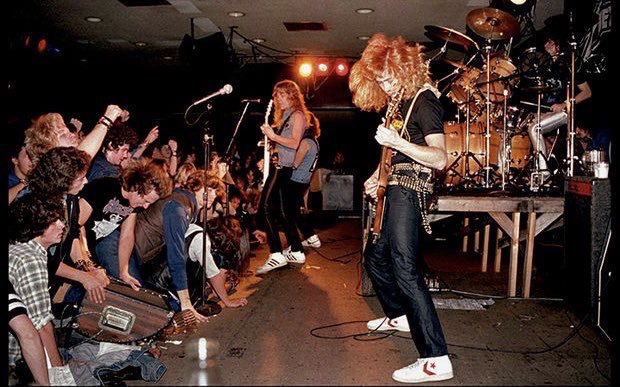
An early show in the Mustaine Era of Metallica
Kill ‘Em All would turn out to be far more successful than anyone could have ever imagined given that it was an early thrash album by a band that no one had ever heard of – earning widespread critical praise despite not selling that many copies. And between the critical acclaim, word-of-mouth momentum, and touring success (most notably as a result of opening for Twisted Sister) – Metallica had achieved the juice they needed to really propel themselves to the next level. But what Hammett realized as the newest member of the band was that despite all of their talent, the other members of Metallica really had no sense of music theory, or in one case (see: Ulrich), no ability to actually play their instrument. So for their next album, Hammett helped the band take a big step forward in terms of musical sophistication by introducing acoustic guitars, extended instrumentals, lyrical maturity, and more complex harmonies. And as a result, Ride the Lightning would take Metallica to new heights – far beyond the raw, simplistic thrash of their debut – earning them even more critical attention, the devotion of legions of metal fans, and legitimate commercial success by reaching #100 on the Billboard 200 (a truly stunning feat for a band who was getting almost no radio play).
Ride the Lighting features what can indisputably be considered some of the signature songwriting achievements of not just Metallica’s own career, but the entire history of heavy metal. “For Whom the Bell Tolls” – which has become a staple of sports arenas and hard rock radio play – is a truly breathtaking achievement and an undeniably incredible listening experience. “Fight Fire With Fire” and “Fade to Black” feature the newly integrated acoustic sound, which serves as a striking supplement to their usual “up to eleven” thrash metal style. The lyrical work also deserves significant praise – especially given the public perception of metal as “meathead music” – and features allusions to the Book of Exodus on “Creeping Death;” Stephen King’s The Stand on the title track; Ernest Hemingway’s novel of the same name on “For Whom the Bell Tolls;” and H.P. Lovecraft’s The Shadow over Innsmouth on the title of their instrumental track, “The Call of the Ktulu.” Hetfield and company also tackle the heavy themes of suicide on “Fade to Black,” threats of Cold War era nuclear warfare on “Fight Fire With Fire,” and the criminal justice system on “For Whom the Bell Tolls” – showing skeptical audiences that their musical interests go far beyond playing really loud and really fast.

James Hetfield and Kirk Hammett enjoy some rest and relaxation
In their breakthrough second album, Metallica would set the stage for all of the success that would come their way for the rest of their career. Unsatisfied with simply being a thrash band that played thrash music for thrash audiences, they took a baby step toward their ultimate destination of being a legitimately marketable hard rock band, which would eventually culminate in the release of their self-titled fifth album in 1991 and begin a twenty-five-year run of records that would all reach #1 on the Billboard 200. And despite the fact that it would be polarizing to their original fans (a theme that continues to come up in this series with artists that achieve superstardom), Metallica owns the distinct honor of being a thrash metal band that can really play music that is true to the genre, but also one that can expand the tent to music fans who may not have otherwise been as receptive. I refuse to concede that it is anything other than an extreme positive that Metallica was not only able to establish themselves as one of the greatest, most prolific bands of all time – but also contribute to far-reaching, worldwide success of a genre that could have remained a niche one without their influence. They are one of the all-time great acts of not just heavy metal, not just rock, but of the entire pantheon of popular music in the twentieth century.
 80 Albums of the 80s
Leave a comment