Speaking in Tongues – Talking Heads (1983)
August 8, 2025
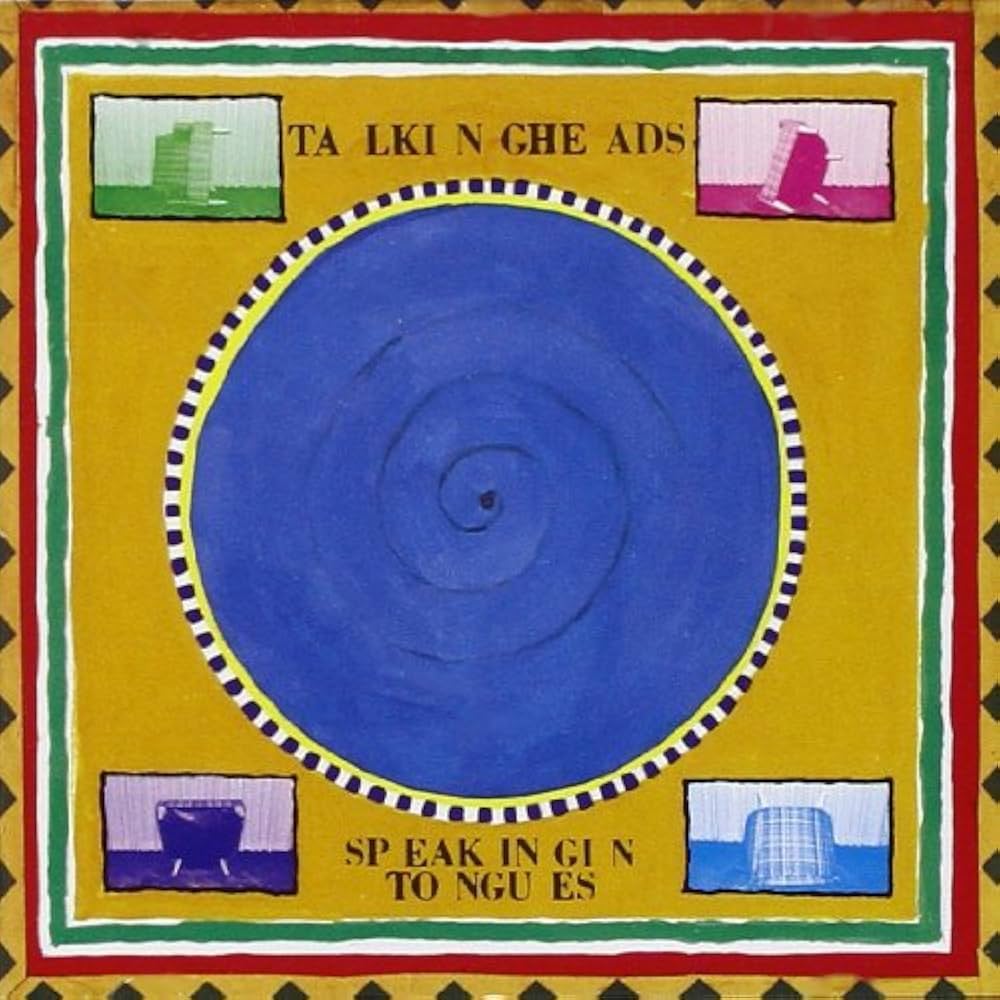
After the chaos, dysfunction, and infighting that came with the recording and release of 1980’s Remain in Light, the members of Talking Heads were all ready for a little time apart. The group would splinter off into three separate factions to release their own projects in 1981 – with David Byrne and Brian Eno releasing My Life in the Bush of Ghosts, Tina Weymouth and Chris Frantz releasing Tom Tom Club’s self-titled debut, and Jerry Harrison releasing The Red and the Black. And to keep their fans happy in the meantime, the band would also release a live album in 1982 called The Name of This Band Is Talking Heads, which included live recordings that took place from 1977-80.
But after their brief hiatus, the four members of Talking Heads were ready to get back together to record their fifth studio album, 1983’s Speaking in Tongues. Given all the drama he caused a few years prior, Eno was not invited back to produce the record despite the fact that he had done so on their last three albums, and would instead go on to work with U2 on several of their releases in the 80s and 90s. So this time around, the band would self-produce the record with a more democratic process that opened the door for all of the members to contribute ideas. And building off of the commercial success and pop chart relevance of Tom Tom Club, Talking Heads moved toward a much more accessible direction that would lead to the best record sales of their career – the album itself would chart at #15 on the Billboard 200, and they would score their first and only top 10 single with “Burning Down the House.”
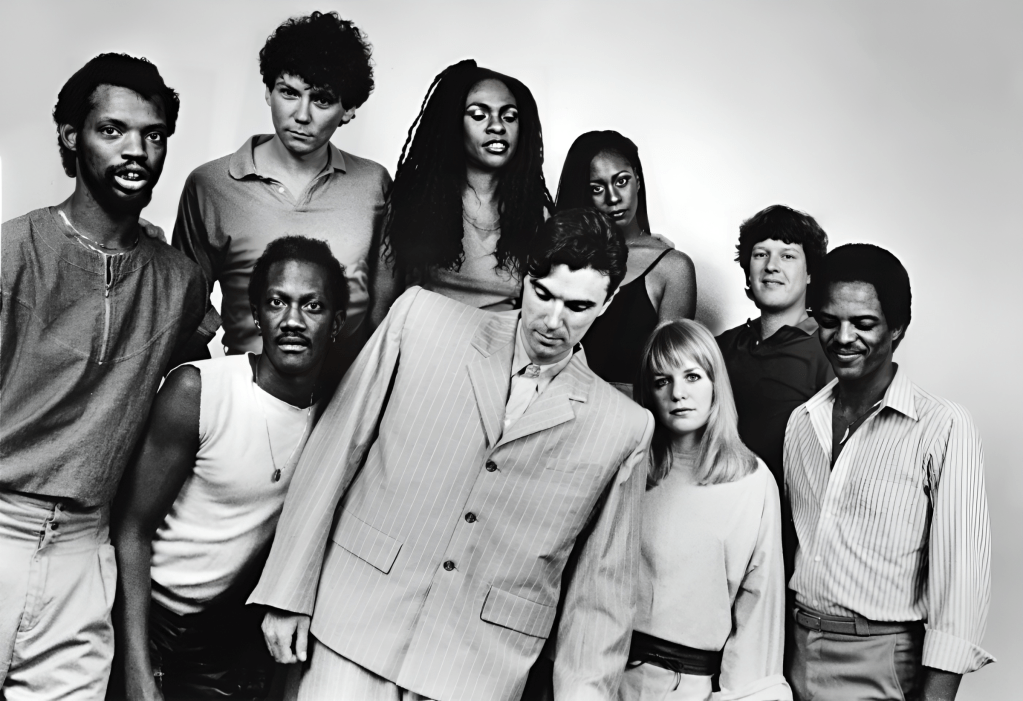
Talking Heads’ live lineup in ’83
The album would earn additional success from the release of Jonathan Demme’s 1984 concert film Stop Making Sense, which captured four performances in Los Angeles consisting mainly of the music from Speaking in Tongues, along with some of the band’s other hits and even the solo work of Byrne and Tom Tom Club. The film is regarded as one of the greatest and most unique concert films of all time – given its groundbreaking digital audio techniques, the fact that it shows very little of the crowd, its lack of documentary-style interview cutaways, and its perfect demonstration of the band’s kinetic energy as they progressively build their set while performing. And Byrne shows off not only his athleticism and cardio ability with the seemingly non-stop dancing and movement that takes place over all four shows, but also delivers with the iconic “big suit” that would become one of the signature fits of the decade.
The tracklist of Speaking in Tongues is undoubtedly more commercially viable than the experimental releases of the Eno era, but that doesn’t mean there’s anything about it that could possibly be described as a normal pop album. The band’s bizarre lyrics – that oftentimes are completely incomprehensible – take aim at the society they see around them (and are clearly not all too fond of). “Burning Down the House” tells the story of a man who sets his own home on fire because it’s the only way he can get out of debt, “Making Flippy Floppy” is about falling in line and conforming to the repressed world we live in, and “Pull Up the Roots” is their plea for people to fight back and try to uproot some of the societal ills that seem insurmountable. The album’s title is also clearly indicative of the thematic throughline, with lyrics that routinely reference and criticize organized religion, including the description of an intense religious bodily experience in “Slippery People,” the introduction of “Swamp” where Byrne sounds as though he’s literally speaking in tongues, and a direct reference to transubstantiation in “Moon Rocks.” But aside from the somewhat heavy thematic material and inscrutable lyrics, the album’s best track is its final one, “This Must Be the Place (Naive Melody).” The surprisingly sweet love song was written by Bryne about his girlfriend and is a rarity in the otherwise oddball discography of Talking Heads.
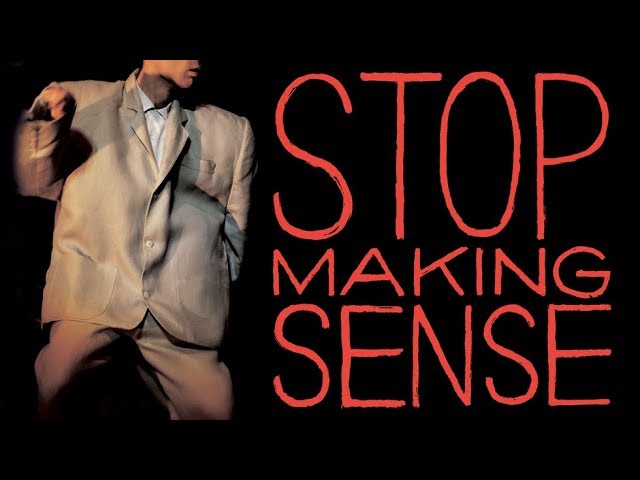
Movie poster for Jonathan Demme’s Stop Making Sense
In many ways, Speaking in Tongues shares a lot of parallels with Genesis’ 1981 release of Abacab, in that it was the moment when a quirky band with a very loyal following was able to bring their music to the masses in a way that was simultaneously accessible and still true to form. It still features a lot of the weird, unique vibes of the Eno years, but includes some of their all-time classics like “Burning Down the House” and “This Must Be the Place,” which can routinely be heard on radio stations, featured in bar jukeboxes, and included on blockbuster movie soundtracks. And on top of bringing the band some commercial success, it likely introduced them to a large number of people who would have never considered buying their records in the past, and maybe even enticed them to try out some of their prior work. But to me, this would be the last truly excellent record in their discography. 1985’s Little Creatures and 1986’s True Stories are both perfectly fine albums and are certainly listenable, but they definitely feel like a step down in comparison to everything that came before them. But despite that, Speaking in Tongues exists as the capstone of a magnificent five-album run that took place over the course of only six years, and deserves to be celebrated as the apex of a one-of-a-kind band’s extraordinary career.

 80 Albums of the 80s
Leave a comment