Rebel Yell – Billy Idol (1983)
July 18, 2025
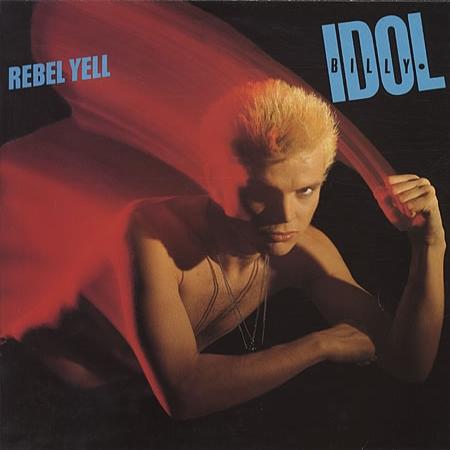
In the late 1970s, Billy Idol spent some time in a couple of bands called Chelsea and Generation X, where he and his bandmates wanted to expand the punk rock sound to become more melodic and radio friendly in ways more akin to the Beatles and the Rolling Stones. But after failing to break through with either group, Idol went out on his own to try to make a name for himself as a solo artist in the early 1980s. In 1981, he finally got the break he was looking for after the success of his first EP called Don’t Stop, which included two covers that would go on to become some of his most well known works – “Mony Mony” (originally by Tommy James and the Shondells) and “Dancing With Myself” (originally written by his former band, Generation X). Despite not quite reaching the Billboard Hot 100, both songs reached the Dance chart and opened the door for him to release his self-titled debut album in 1982.

Idol in his Generation X years
Billy Idol would become his big breakthrough to mainstream audiences, reaching #45 on the Billboard 200 and featuring two singles that would live on as major parts of the Idol canon – “White Wedding (Part I)” and “Hot in the City.” Propelled by his successful debut album, hit singles, and the popularity of the “White Wedding” music video on MTV, Idol was able to capitalize on what was undoubtedly his moment and release his magnum opus, Rebel Yell, just a little over a year later. This time, he pushed further away from the punk and hard rock sounds from which he started, further exploring other genres like disco, new wave, synth pop, and glam rock. And his stylistic gamble would pay off in a big way, as the album would shoot to #6 on the US pop chart and include four singles that would reach the top 50 – “Eyes Without a Face” (#4), “Flesh for Fantasy” (#29), “Rebel Yell” (#46), and “Catch My Fall” (#50). Plus, all four singles would join “White Wedding” as popular music videos that would get heavy airtime on MTV, catapulting Idol to a different level of fame and notoriety given his bleach blonde spiked hair and signature sneer.
The title track – which was named after the brand of whiskey that Idol saw Mick Jagger and Keith Richards drinking at a party – kicks off the record with a shot of adrenaline and is an absolute banger that stays true to his earlier work and hard rock roots. But the album is at its absolute best on “Eyes Without a Face,” a disco-infused rock ballad that is an undeniable hit and an extremely high-quality piece of songwriting and production. The lyrics reference substance abuse and infidelity issues in his relationship with Perri Lister, who just so happens to sing backing vocals on the chorus, and bring a more human side to the cartoon character persona of Billy Idol. Aside from being his biggest hit, it also kicks off a four-track run where the album really catches fire and proves itself to be a pop rock masterpiece – “Blue Highway,” “Flesh for Fantasy,” and “Catch My Fall” all continue the infectiously synthy sound that shines throughout the record and prevent the listener from even considering turning it off.
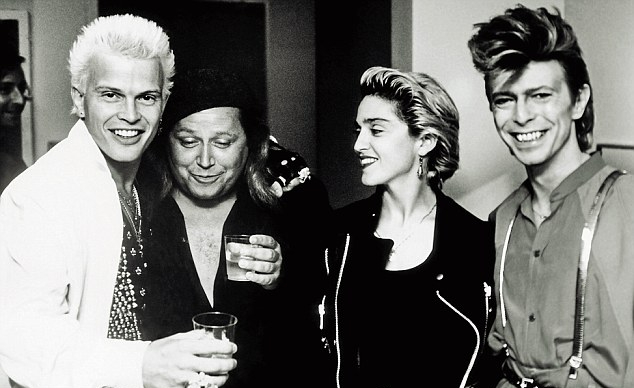
Idol with Sam Kinison, Madonna, and David Bowie
Billy Idol in many ways is the composite of all of the most popular aspects of music in the 1980s. His superpower was being able to blend the glitziness of glam rock, the sensitive tough guy persona popularized by punk rock, and the danceability of new wave and disco. And even beyond the music itself, his over-the-top look does the exact same thing – the big, bleached hair is reminiscent of new wave bands like Duran Duran, while his seemingly exclusively leather outfits are more reminiscent of punk bands like the Clash. Idol is truly a character as much as a musician, and is sort of the closest thing I can think of to a mascot for the decade. But aside from his hair and his clothes and his sneer, he truly mastered the art of making a dance record with balls that could simultaneously appeal to people who go to nightclubs and those who go to rock concerts. Listeners can’t decide if they should be swinging their hips or banging their heads, and ultimately realize that they have no choice but to do both. Idol was one of the most singular pop acts of the 80s – who will always hold a unique place in music history as a genre-bending superstar – and is in many ways a fitting personification of the decade as a whole.

 80 Albums of the 80s
Leave a comment