Eliminator – ZZ Top (1983)
July 4, 2025

By 1983, ZZ Top had had no shortage of success – their prior five albums had landed in the top 25 of the Billboard 200 and they had released a handful of hit singles, including 1975’s “Tush,” which peaked at #20 on the Hot 100. But despite the fact that they had established themselves as a fairly successful bluesy Southern rock band, bandleader Billy Gibbons wanted to evolve the trio’s sound with the changing pop landscape. Gibbons has since said that he was inspired by a lot of the new wave music that had been coming out in the early part of the decade – specifically by Depeche Mode and Orchestral Manoeuvres in the Dark (which I never would’ve pegged as influential bands for ZZ Top) – and brought in a team of producers and engineers to help him achieve his goal for 1983’s Eliminator.
So with the band’s new direction, what was once a true musical trio of guitar, bass, and drums had now become an elaborate combination of synthesizers and drum machines to work side-by-side with Gibbons’ signature guitar sound. And despite the fact that bassist Dusty Hill and drummer Frank Beard were present for much of the in-studio recording sessions, Gibbons and his handpicked producer replaced a lot of their contributions in the editing phase of the album. Another key change for the band’s sound also came at the suggestion of the album’s pre-production engineer and former DJ, Linden Hudson, who presented Gibbons with his own personal research showing that the majority of the hit songs of the era were hitting a tempo of around 124 beats per minute (bpm), and completely changed the way that he looked at timing throughout the recording process.
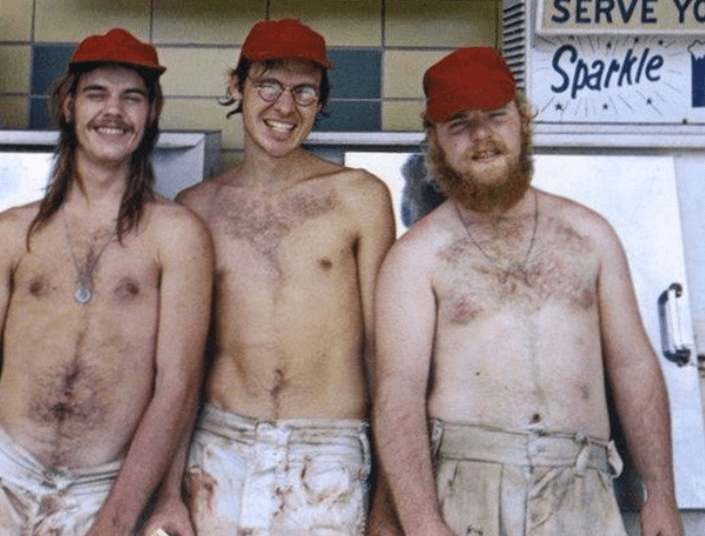
ZZ Top in the early 70s
Hudson’s hypothesis would prove to be absolutely correct, as the band’s three biggest hits from the record – “Legs,” “Sharp Dressed Man,” and “Gimme All Your Lovin’” – would all hover right around 124 bpm. And on top of the success of its singles, the album itself would reach #9 on the Billboard 200 and become their best selling record of all time – in part due to their unforgettable music videos that received constant rotation on MTV during the peak of its popularity. But despite the fact that the band was hitting the highest of highs commercially and receiving positive critical reviews for their shift with modern music, there was significant backlash among their longtime fans who had followed them going all the way back to the early 70s. Given that their core fanbase consisted of an older generation of people who gravitated more toward blues and even country rock, it’s fairly unsurprising that there would be some resistance to their evolution toward new wave and synth rock. But the band was clearly concerned enough with drawing additional anger from their audience that they kept it secret until years later that they were unable to perform their new songs live without pre-recorded tracks.
“Legs,” “Sharp Dressed Man,” and “Gimme All Your Lovin’” – which have become the most memorable songs of the band’s discography and are constantly heard to this day on classic rock radio stations – are catchy, infectious pop rock gold that are impossible not to tap your foot to. Aside from their three mega-hits, much of the other music on the album does sort of come across as if it were written by three teenage boys – “Got Me Under Pressure” tells the story of a woman who is into BDSM and cocaine, “I Got the Six” is a three-minute long sixty-nine joke, and songs like “Dirty Dog” and “Bad Girl” are exactly what you’d expect them to me. But despite the sometimes juvenile lyrical content, the music is excellent. The flashy guitar of Gibbons mixes with the up-tempo drumbeat and sparingly used synth sound in a way that truly produces pop music with balls. There are parts of the album that feel like a true hard rock record, while there are catchy choruses that fit in perfectly with the pop feel of the early 80s, and the two combine to produce something that sounds brand new while also staying true to who ZZ Top was as a band.

ZZ Top enters the 80s
With Eliminator, ZZ Top adapted their sound and matched the exact cultural moment they were in with an album that is excessive and cheesy, but still totally awesome. And where their legacy during this era may ultimately lie is from the fact that they were able to flip the script on the blueprint for how to be a star in the 80s music landscape. Where the conventional wisdom went that “video killed the radio star,” ZZ Top spit in the face of the idea that you had to be gorgeous to make it big. They leaned into their long beards and unique aesthetic and played up their goofiness factor with music videos that included spinning guitars covered in sheepskin and Gibbons’ 1933 Ford coupe from the album cover.
Now, did ZZ Top turn their backs on their original fans and “sell out” by incorporating synths and drum machines into their music? They probably did. But did they also create an unforgettable album that has become more appreciated and recognized for its influence decades later? Absolutely. It’s hard not to see the throughline of the music on Eliminator and how it led to some of the biggest pop rock records of the decade, including Van Halen’s Nineteen Eighty-Four and Robert Palmer’s Riptide, which both also received their fair share of hate from core fans years later. What it comes down to is – ZZ Top rules; their beards rule; Eliminator rules; their hit songs rule; and their cheesy music videos rule – and if you can’t appreciate that, you might just be taking yourself a bit too seriously.

 80 Albums of the 80s
Leave a comment