You Are What You Is – Frank Zappa (1981)
February 28, 2025
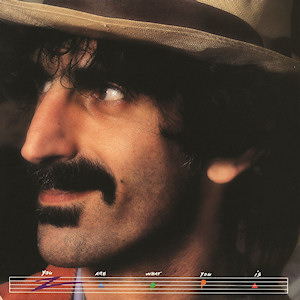
After an extremely prolific run as both the face of the Mothers of Invention and as a solo artist – which included a twenty-nine album run over the course of a decade and a half – Frank Zappa entered the 80s determined to keep up this breakneck pace of releases. In 1981 alone, he released five separate albums beginning with Tinsel Town Rebellion, followed by the Shut Up ‘n Play Yer Guitar trilogy of live albums, and then concluding with his best work of the 80s, You Are What You Is. But getting to his 80s high-point wasn’t easy, and finally arriving on the right collection of songs took several fits and starts. Shortly after the 1979 release of his magnum opus rock opera, Joe’s Garage, Zappa set out to release a live triple album called Warts and All. Understandably, the ambitious project would prove to be a bit unwieldy, and he would end up abandoning the idea in favor of a studio record called Crush All Boxes, which he also scrapped despite the fact that it included many of the tracks that eventually made it on to You Are What You Is.
Given the fact that Zappa’s undeniable genius is matched only by his unbridled narcissism, it’s not surprising that he was really swinging for the fences with this album. In typical Zappa fashion, he wanted to combine his knack for spot-on social commentary with his very polarizing sense of humor (which although I do appreciate, I can acknowledge does sometimes cross the line into being in poor taste), all while blending seemingly incongruous musical genres like doo wop, new wave, and country. He also one-upped the already bold move of releasing a double album by breaking it into three distinct suites, with the A and B sides of the first record each respectively comprising the first two, and both sides of the second record combining as the third. And although the extremely anal and particular Zappa took on lead guitar and vocals for the recording, he did bring in a number of studio musicians, which included Jimmy Carl Black and Motorhead Sherwood (both former members of the Mothers), as well as his own children Moon and Ahmet.

Zappa in the studio
On the first track of the first suite, “Teen-Age Wind,” Zappa targets his sharp tongue at hippies who criticize societal conformity while also sharing a homogeneous sense of style and taste in music (specifically calling out the Grateful Dead). He also includes heavy doses of sex puns and low-brow humor with the country western pastiche, “Harder Than Your Husband,” and the reggae-inspired “Goblin Girl” – the latter of which is the perfect summation of Zappa, lyrically focusing on crude humor while also including musical quotations and references from earlier on the record.
The second suite begins by thematically targeting the emerging excess and societal shallowness that became trademarks of the decade. “Society Pages,” “I’m a Beautiful Guy,” and “Beauty Knows No Pain” go after gossip rags and the cultural obsession with physical beauty (a bit ironic given Zappa’s own unending appetite for new sexual conquests). From there, he moves his attention toward the story of a girl named Charlie, whose hobbies include casual sex and cocaine use – “Charlie’s enormous nose, well, it’s all white. The girl got a very large nose, but it’s all white. She once was okay, but she’s been blowin’ it quite a bit.” By the end of the track, Charlie has died right in front of her friends as a result of her rampant drug use, leading into “Any Downers?” where her friends are trying to acquire opioids during Charlie’s burial.
Finally, on the two-sided third suite, you can see Zappa’s rage toward the US government and the Church, which had become nearly indistinguishable from one another during the newly crowned Reagan administration. “The Meek Shall Inherit Nothing” establishes the theme most effectively, satirizing the well-known bible verse (“Blessed are the meek: for they shall inherit the earth”) and making it clear to listeners that “in Washington, they just takes care of number one, an’ number one ain’t you. You ain’t even number two.” Zappa continues to lambaste the Church on “Dumb All Over” and “Heavenly Bank Account,” where he respectively criticizes their effect on US policy and the greed of the popular televangelists of the era. The final act of the album also includes commentary on cultural appropriation with the title track, the faux-originality of the emerging scene at the Mudd Club in New York City, and the US military with “If Only She Woulda” and “Drafted Again.”
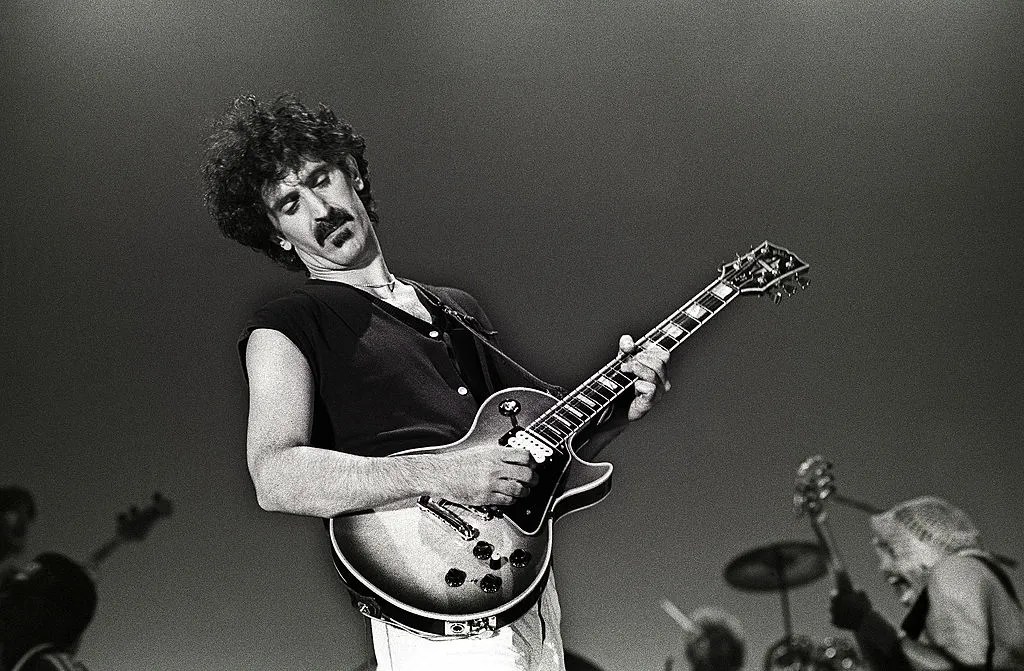
Zappa on stage in the Netherlands
For me, You Are What You Is closes out the peak of Zappa’s solo discography, which features many of his most critically and commercially successful releases, including Apostrophe(’), Sheik Yerbouti, and Joe’s Garage. His prescient social commentary really can’t be overstated, as to this day we still see the same issues he calls out with the government, the Church, drug use, and the increasingly shallow nature of society. And aside from the thematic excellence present throughout most of the album, he is also undoubtedly one of the greatest musical minds of the twentieth century. The more you re-listen to his works and start to notice the callbacks and reference points that come up throughout the record (and even sometimes tie back to prior albums), the more you realize that this guy was just operating on a totally different level than most of his peers. But the unfortunate thing about Zappa – and about being a Zappa fan – is that he was a pretty shitty guy. Verbal abuse towards studio musicians, rampant objectification of women (both in his life and his music), and a disturbing lack of boundaries as a parent definitely complicate his legacy. But as we continue to learn more about the dark sides of our favorite artists and re-examine behavior that might once have been considered acceptable, I don’t believe that poor character should impact our perception of great art. On one hand, Zappa was an objectively awful human being; but on the other hand, he was a musical mastermind. Both can be true, both are true, and You Are What You Is showcases both of these undeniable facts.

 80 Albums of the 80s
Leave a comment