Moving Pictures – Rush (1981)
January 10, 2025
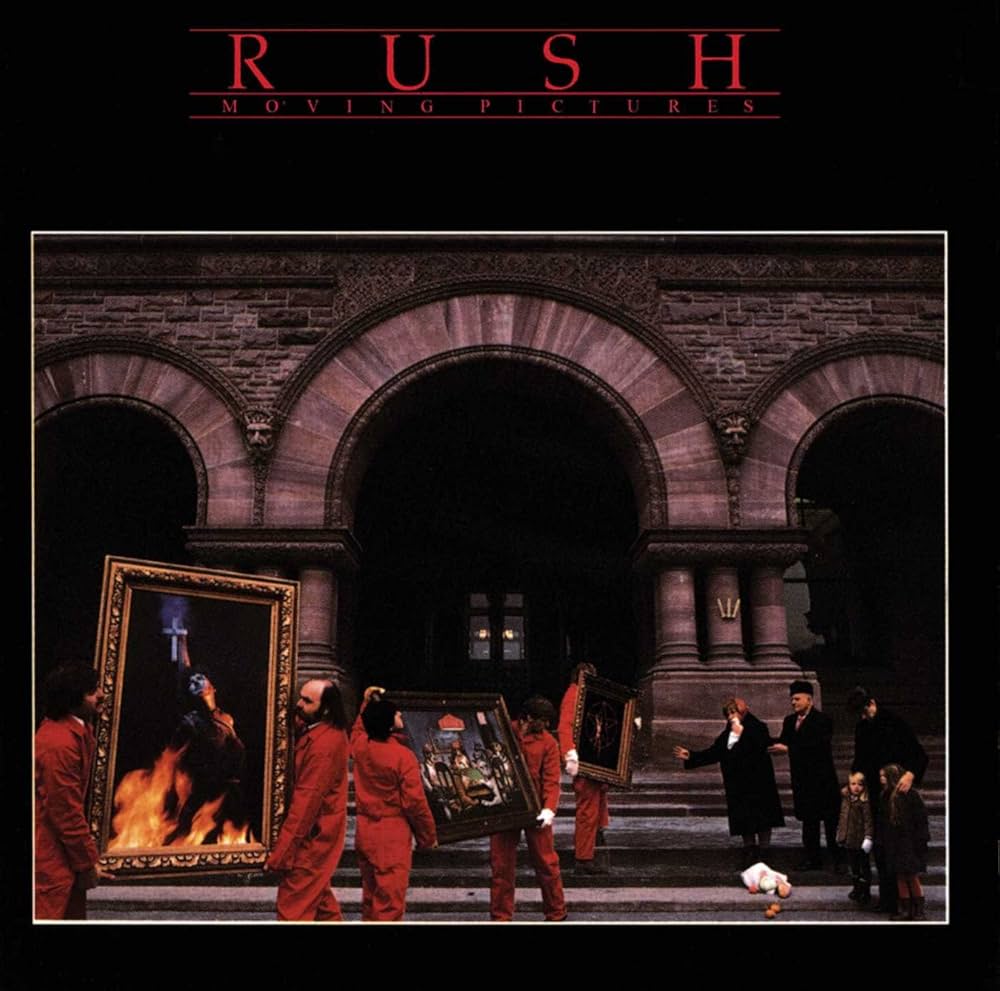
After breaking into the mainstream and achieving commercial success with their 1980 release, Permanent Waves, which featured their biggest song to date in “The Spirit of the Radio,” Rush made one of the most consequential choices of their entire career. Their original plan had been to record their second live album, but the band ultimately decided that they needed to take advantage of the momentum they had built up with the release of Permanent Waves, as well as the success of the accompanying tour. And as a result, Rush continued to push forward with their new radio-friendly sound that featured shorter, catchier songs that could appeal to a much broader audience, leading to the release of Moving Pictures in 1981.
The album was an instant success and included what would end up becoming Rush’s signature song and their most widely recognized achievement in “Tom Sawyer.” But what many don’t know is that their all-time mega-hit actually came from a recording session with a different band. Pye Dubois of fellow Canadian rock band Max Webster had already written the song and determined that it was actually much better suited for Rush, gifting it to the band during their collaboration on one of the tracks for his upcoming album. Dubois and Rush’s drummer and primary lyricist Neil Peart re-worked the lyrics, handing it off to lead singer and bassist Geddy Lee and guitarist Alex Lifeson, who put the words to music and created one of the most well-known rock songs of the decade. On top of the single’s success, the album became their best selling record to date – peaking at #3 on U.S. charts and climbing all the way to #1 in Canada – and received glowing critical reviews.
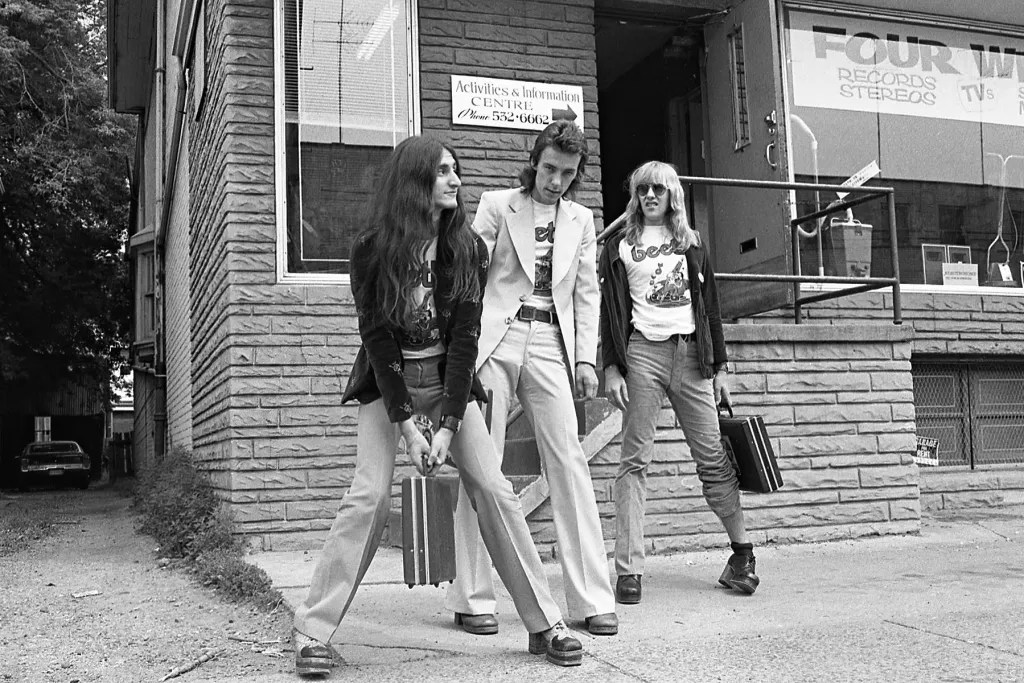
Rush in the early days of their career
Despite the fact that Rush was able to reach mainstream audiences, by no means did they abandon their nerd rock roots. The album includes the purely instrumental “YYZ,” named after Toronto’s airport and rhythmically imitating Morse code for the titular three letters, as well as “The Camera Eye” – a nearly 11-minute, two-part ode to New York City and London. The band also makes numerous literary references throughout the record, including:
- Tom Sawyer: Named after Mark Twain’s Tom Sawyer, who appears in four of the author’s books – most notably in the The Adventures of Tom Sawyer and Adventures of Huckleberry Finn.
- Red Barchetta: The dystopian tale of the red Ferrari 166 MM Barchetta featured in Richard S. Foster’s short story, “A Nice Morning Drive.”
- Limelight: The lyrics “all the world’s indeed a stage, and we are merely players” come from Shakespeare’s As You Like It.
- The Camera Eye: Makes reference to the titles of multiple pieces of John Dos Passos’ U.S.A. trilogy.
Much of Peart’s writing seems to be centered around his pessimistic view of the society he sees around him, as well as his disgust with the repercussions of the band’s sudden fame. In “Red Barchetta,” the protagonist flees from police hover cars in a dystopian city toward a new life in the country. The third installment of their Fear Trilogy, “Witch Hunt,” was recorded with the band and studio staff shouting to imitate the sound of an angry mob. And Peart’s “Limelight” makes clear how the smalltown Canadian boy is adapting to his new life in “the gilded cage.”
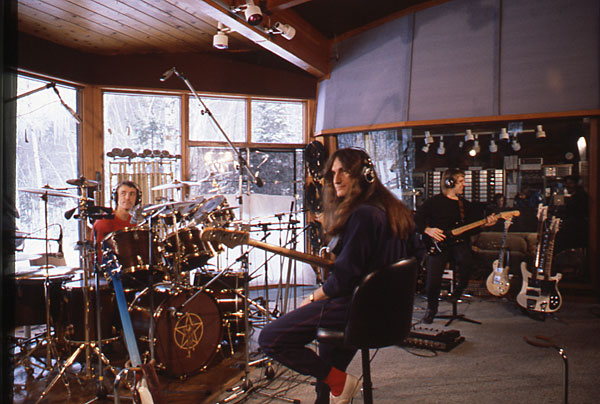
Rush in the studio recording Moving Pictures
Canada’s sweethearts hit their absolute apex with this album – not only blending genres from pop to prog to metal – but still maintaining their nerdy sensibilities and talent for incorporating Peart’s intellectual lyrics with the complex musical prowess of Lee and Lifeson. Rush refuses to alienate their original fans and instead widens the net to welcome newcomers who likely never would have had the attention span or appetite for their earlier works. And as a result, you have a band that to this day still has one of the most dedicated fan bases in all of rock music, but is also a widely known and enjoyed classic rock staple who can be heard on the radio at any given moment. Give these guys their flowers – they’re probably the most accomplished, popular group of rock nerds since Led Zeppelin. Rush rules.

 80 Albums of the 80s
Leave a comment